M
MercyNews
Home
Back
WEF: AI Could Reshape Jobs by 2030
Technology

WEF: AI Could Reshape Jobs by 2030

Business Insider4d ago
3 min read
📋

Key Facts

  • ✓ The World Economic Forum published a white paper titled "Four Futures for Jobs in the New Economy: AI and Talent in 2030."
  • ✓ The report outlines four scenarios based on the speed of AI advancement and workforce adaptability.
  • ✓ Only the "Co-Pilot Economy" scenario is designed to limit large-scale displacement through worker augmentation.
  • ✓ The other scenarios involve aggressive automation, widening inequality, or rapid obsolescence of roles.

In This Article

  1. Quick Summary
  2. The Four Scenarios for 2030
  3. Uneven Disruption Expected
  4. A Divided Tech Industry

Quick Summary#

The World Economic Forum (WEF) has published a white paper detailing four potential futures for the global job market by 2030, driven by the rapid evolution of artificial intelligence. The report, titled "Four Futures for Jobs in the New Economy: AI and Talent in 2030," warns that while the future of work is not doomed, most paths forward involve painful disruption for workers.

Among the four scenarios mapped out, only the "Co-Pilot Economy" is explicitly designed to limit mass displacement. This scenario relies on gradual AI progress and the availability of AI-ready skillsets, shifting the focus toward augmentation rather than mass automation. The remaining three scenarios range from aggressive automation outpacing reskilling to explosive economic growth that renders existing roles obsolete faster than new ones emerge.

The report highlights that the future will not be defined by technology alone. Policy choices, corporate strategy, and investment in skills are critical factors that will determine how manageable the transition becomes. The findings come as tech leaders remain divided on the ultimate impact of AI, with some predicting massive job losses and others promising productivity boosts.

The Four Scenarios for 2030#

The World Economic Forum bases its outlook on two key variables: the speed of AI capabilities advancement and the readiness of workers and institutions to adapt. These variables create a spectrum of outcomes, ranging from slower, more manageable progress to rapid, disruptive breakthroughs.

Only one of the four scenarios is explicitly designed to limit large-scale displacement. In the "Co-Pilot Economy," AI adoption is widespread but measured. Workers possess the necessary skills to use the technology as a complement rather than a replacement. The report notes that "Gradual AI progress and availability of AI-ready skillsets shift the focus towards augmentation rather than mass automation." In this future, AI reshapes tasks rather than eliminating roles outright, keeping humans in the loop. Even in this optimistic scenario, displacement and job churn have risen, though governments and businesses increasingly view AI as an opportunity.

The remaining three scenarios present sharper disruptions:

  • The Age of Displacement: AI advances faster than education and reskilling systems can respond. This pushes companies to automate aggressively, leaving large parts of the workforce struggling to keep up.
  • Stalled Progress: AI continues to improve, but productivity gains are patchy and concentrated among a small number of firms and regions. This erodes job quality elsewhere and widens inequality.
  • Supercharged Progress: Explosive AI breakthroughs drive rapid economic growth and innovation. However, this path still renders many existing roles obsolete faster than new ones can emerge.

"Gradual AI progress and availability of AI-ready skillsets shift the focus towards augmentation rather than mass automation."

— World Economic Forum Report

Uneven Disruption Expected#

While the WEF outlines these distinct scenarios, researchers caution that the future is unlikely to follow a single, clean path. James Ransom, a research fellow at University College London, suggests that AI progress and workforce readiness will vary widely across industries, jobs, and regions. This variation is expected to result in uneven rather than universal disruption.

Ransom predicts that displacement will likely accelerate over the next few years. Despite this acceleration, he maintains that most workers are still likely to be on the payroll by 2030. The WEF reinforces the idea that technology alone does not dictate outcomes. The report emphasizes that policy choices, corporate strategy, and investment in skills will shape how painful—or manageable—the transition becomes.

Saadia Zahidi, a managing director at the WEF, clarifies that the four scenarios are not predictions of where the world will be in 2030. Instead, she describes them as a framework to help leaders prepare for the evolving global economy.

A Divided Tech Industry#

Tech leaders and AI researchers remain sharply divided over how disruptive AI will ultimately be to the workforce. The debate spans from dire warnings of mass job loss to promises of unprecedented productivity gains and shorter workweeks.

On one side of the divide, figures like Geoffrey Hinton, often described as the "godfather of AI," and Dario Amodei, CEO of Anthropic, have warned that AI could replace large swaths of white-collar work within just a few years.

On the other side, leaders including Aaron Levie, CEO of Box, and Jensen Huang, CEO of Nvidia, have predicted that AI will deliver explosive productivity gains, even as it renders many existing roles obsolete. A more optimistic camp, including Mustafa Suleyman of Microsoft AI and Eric Yuan of Zoom, argues that AI will ultimately augment workers rather than replace them.

"Although displacement and job churn have risen, governments, businesses, and workers increasingly view AI as an opportunity rather than a threat."

— World Economic Forum Report

"The four scenarios "are not predictions of where the world will be in 2030, but a framework to help leaders prepare for the evolving global economy.""

— Saadia Zahidi, Managing Director, WEF

Continue scrolling for more

AI Transforms Mathematical Research and Proofs
Technology

AI Transforms Mathematical Research and Proofs

Artificial intelligence is shifting from a promise to a reality in mathematics. Machine learning models are now generating original theorems, forcing a reevaluation of research and teaching methods.

Just now
4 min
163
Read Article
Leaked Gameplay Reveals Canceled Nolanverse Batman Game
Entertainment

Leaked Gameplay Reveals Canceled Nolanverse Batman Game

A canceled Batman project from Monolith Productions has resurfaced through leaked gameplay, revealing ambitious Tumbler driving segments.

3h
5 min
7
Read Article
Russia Seizes Rockwool and CanPack Assets
Economics

Russia Seizes Rockwool and CanPack Assets

Russia has placed the assets of two major foreign industrial groups, Rockwool and CanPack, under temporary state management. Valued at 80-90 billion rubles, the move signals a potential shift toward domestic ownership.

3h
5 min
7
Read Article
Economics

Alfa-Bank's Generous Offer for Evroplan

Evroplan shares surged 16% after Alfa-Bank announced a tender offer significantly above market value. Market analysts predict high uptake.

3h
3 min
7
Read Article
Michelle Williams Joins Daniel Craig, Cillian Murphy in Damien Chazelle’s Next Movie
Entertainment

Michelle Williams Joins Daniel Craig, Cillian Murphy in Damien Chazelle’s Next Movie

Michelle Williams will join Cillian Murphy and Daniel Craig in Damien Chazelle’s next movie. The untitled film, reportedly set in a prison, was written by Chazelle, who will direct and produce alongside Olivia Hamilton under their Wild Chickens Productions banner. Chazelle is looking for a comeback following “Babylon,” an ambitious look at the early days […]

3h
3 min
0
Read Article
Elon Musk vs. OpenAI: Trial Date Set for April 27
Technology

Elon Musk vs. OpenAI: Trial Date Set for April 27

A judge has scheduled the trial between Elon Musk and OpenAI leaders for April 27, 2026. The lawsuit centers on allegations that the AI startup deviated from its original mission.

3h
5 min
9
Read Article
Bitcoin Climbs Above $93K as US Inflation Holds Steady
Cryptocurrency

Bitcoin Climbs Above $93K as US Inflation Holds Steady

Bitcoin hits $93K as volume surges, but sellers dominate—will it reach $100K or face more pressure ahead?

3h
3 min
0
Read Article
EN DIRECT - Suivez la soirée d’ouverture des 200 ans du Figaro au Grand Palais
Culture

EN DIRECT - Suivez la soirée d’ouverture des 200 ans du Figaro au Grand Palais

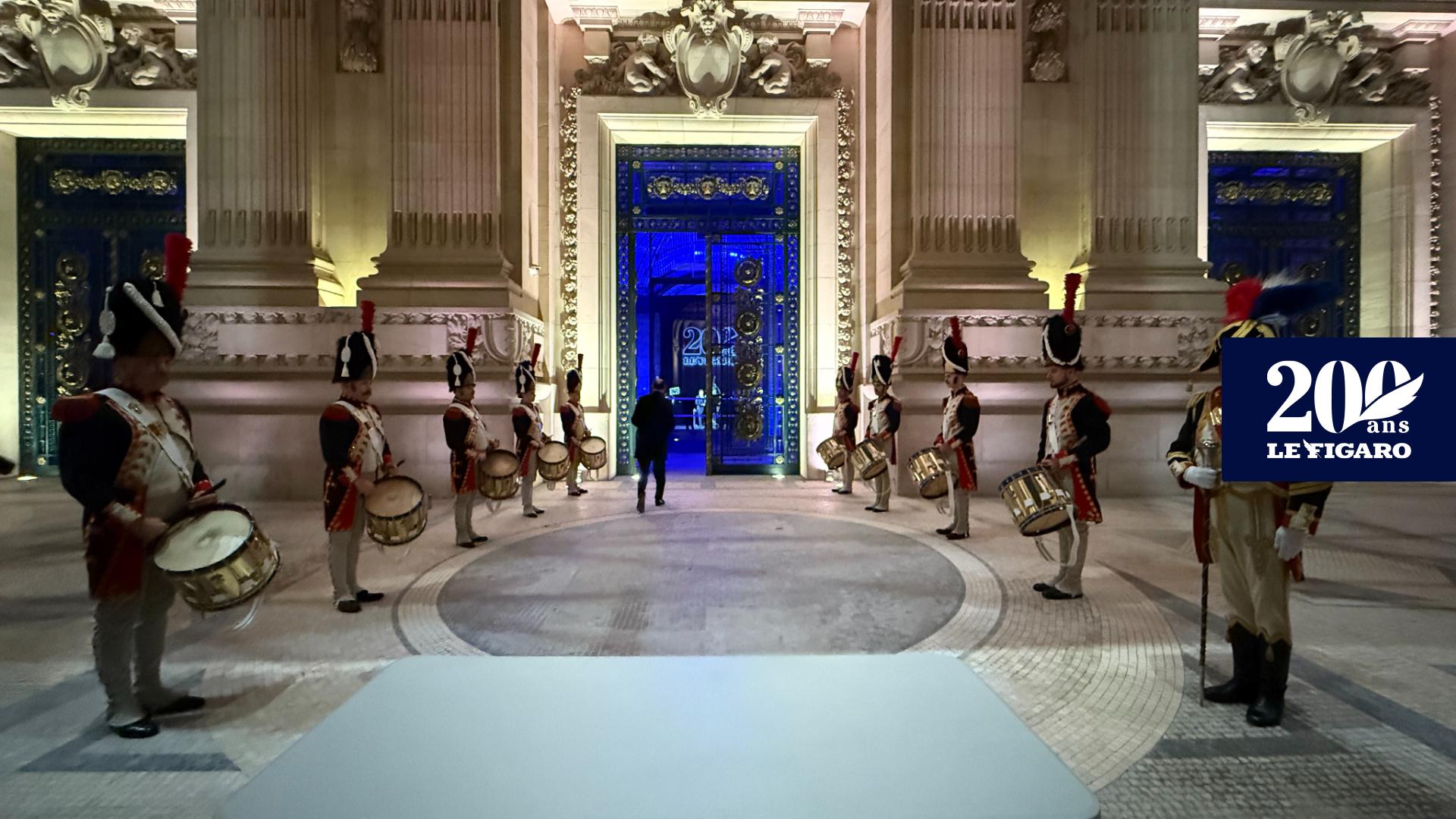
Ce mardi soir débutent les festivités du bicentenaire de notre journal. Nous vous proposons trois jours de festivités sous la nef du Grand Palais, à Paris, avec des conférences, des émissions et une exposition immersive. Vivez avec nous la soirée d’inauguration, en présence de nombreuses personnalités.

3h
3 min
0
Read Article
Celebrity deaths 2026: Remembering the famous people we lost this year
Entertainment

Celebrity deaths 2026: Remembering the famous people we lost this year

Scott Adams. Lea Suzuki/San Francisco Chronicle/Getty Images "Dilbert" creator Scott Adams passed away. So did Grateful Dead founder Bob Weir. Legendary independent film director Béla Tarr also died. Below, we look back at those we lost in 2026. Scott Adams, 68 Scott Adams. Michael Macor/Getty Images Adams based the character in his beloved "Dilbert" comic strip on his coworkers at the telephone company he worked at in the 1980s. By the end of the decade, the character and his satirical office humor began appearing in comic strips. At its peak, "Dilbert" was syndicated in over 2,000 newspapers. A cartoon series debuted in 1999 and ran for two seasons. Adams gained notoriety when he began writing blog posts praising Donald Trump during his 2016 presidential run. In 2023, "Dilbert" was pulled from newspapers across the US following racist comments made by Adams. Adams died on January 13 following a bout with metastatic prostate cancer. Béla Tarr, 70 Béla Tarr. Sean Gallup/Getty Hungarian filmmaker Béla Tarr became a legend in the arthouse world for his unflinching work featuring several-minute-long takes. With movies like "Family Nest" (1979) and "The Turin Horse" (2011), Tarr showcased his slow cinema style while focusing on marginalized characters living bleak lives. Tarr pushed the envelope with his style when he made "Sátántangó" in 1994, which had a run time of 450 minutes. His work influenced several arthouse filmmakers, including Jim Jarmusch and Gus Van Sant's "Death Trilogy" ("Gerry," "Elephant," and "Last Days"). Tarr died on January 6 following a battle with a "long and serious illness." Bob Weir, 78 Bob Weir. Mark Sullivan/Getty Weir was one of the founding members of the Grateful Dead. The singer-songwriter wrote and/or sang on songs like "Sugar Magnolia," "Playing in the Band," "Truckin,'" "I Need a Miracle," and "The Other One." After the Grateful Dead disbanded in 1995, Weir went on to form several other bands, including Kingfish, Bobby and the Midnites, RatDog, The Other Ones, and, alongside John Mayer, Dead & Company. In the summer of 2025, Weir was diagnosed with cancer. Weir died on January 10. Read the original article on Business Insider

3h
3 min
0
Read Article
Guillaume Tabard : «Trouver une solution sur le budget sans ajouter aux abandons»
Politics

Guillaume Tabard : «Trouver une solution sur le budget sans ajouter aux abandons»

CONTRE-POINT - L’obsession est d’en finir avec ce PLF dont plus personne n’attend qu’il contribue à faire avancer l’économie et à faire reculer les déficits mais dont on espère juste qu’il permette d’éviter une crise politique.

3h
3 min
0
Read Article
🎉

You're all caught up!

Check back later for more stories

Back to Home