M
MercyNews
Home
Back
US Coast Guard Retracts Policy on Swastikas
Politics

US Coast Guard Retracts Policy on Swastikas

Times of IsraelDec 25
3 min read
📋

Key Facts

  • ✓ The US Coast Guard has issued a second reversal on a policy change.
  • ✓ The swastika and noose are now explicitly listed as hate symbols.
  • ✓ The move clears the way for the branch's new chief to be sworn in.
  • ✓ The retraction followed an objection from a Jewish senator.

In This Article

  1. Quick Summary
  2. Policy Reversal and Backlash
  3. Impact on Leadership Transition
  4. Historical Context and Implications
  5. Conclusion

Quick Summary#

The US Coast Guard has finalized a second policy reversal, explicitly banning the swastika and noose as hate symbols on uniforms. This move comes after a period of intense backlash regarding an initial attempt to relax rules governing such imagery. The policy change was a necessary step to clear the way for the branch's new chief to be sworn in, following objections from a Jewish senator who raised concerns about the display of hate symbols.

The controversy began when the service attempted to modify its appearance policy, leading to public outcry and political scrutiny. The final retraction solidifies the military branch's stance against hate symbols, ensuring that the swearing-in of the new commandant could proceed without further delay. The incident underscores the ongoing challenges military organizations face in balancing uniform regulations with the need to combat extremism and maintain an inclusive environment.

Policy Reversal and Backlash#

The US Coast Guard recently navigated a complex controversy regarding its uniform and grooming standards. Initially, the branch proposed a policy update that would have eased restrictions on specific symbols, including the swastika. However, this proposal was met with immediate and widespread backlash from various groups and lawmakers who viewed the potential change as a step backward in the fight against hate speech and extremism within the military.

In response to the outcry, the service executed a second reversal on the matter. The updated policy now explicitly lists the swastika and the noose as prohibited hate symbols. This decisive action was taken to address the concerns raised by the public and political figures, ensuring that the service's values align with its regulatory framework. The swift retraction highlights the sensitivity surrounding historical hate symbols and their place—or lack thereof—in modern military service.

Impact on Leadership Transition#

The debate over the uniform policy had tangible consequences for the US Coast Guard's

The objection from a specific Jewish senator was a pivotal factor in the timeline. By linking the confirmation of the new chief to the policy regarding hate symbols, the legislator ensured that the matter received the necessary attention. With the final retraction and the explicit ban on swastikas and nooses now in place, the path has been cleared for Admiral Fagan to assume her duties. This sequence of events illustrates how legislative oversight can influence internal military policy and leadership transitions.

Historical Context and Implications#

The swastika is universally recognized as a symbol of hate, particularly associated with the Nazi regime and the Holocaust. Its presence in any institutional setting, let alone a branch of the US military, carries heavy historical weight. Similarly, the noose is a potent symbol of racial terror, historically used as a tool of intimidation and violence against African Americans. The explicit listing of these symbols as hate marks is a significant statement by the Coast Guard.

By codifying these bans, the US Coast Guard reinforces its commitment to diversity and inclusion. The decision serves as a clear signal to both current members and the public that the service does not tolerate imagery associated with hate groups. This policy alignment helps protect the integrity of the uniform and ensures that the service remains a welcoming environment for all who serve.

Conclusion#

The US Coast Guard's handling of the uniform policy controversy demonstrates the complex interplay between military regulations, public opinion, and legislative oversight. Following a second reversal, the branch has firmly established that symbols of hate, specifically the swastika and noose, have no place within its ranks. This resolution not only addresses the immediate backlash but also paves the way for the swearing-in of the new commandant. Ultimately, the episode serves as a reminder of the vigilance required to maintain standards of conduct and inclusivity within the armed forces.

#Jewish Times#US Coast Guard#Kristi Noem#swastika#Jacky Rosen#American Jews#antisemitism#Nazi symbols

Continue scrolling for more

Putin's Ukraine Focus Exposes Global Allies
Politics

Putin's Ukraine Focus Exposes Global Allies

A year into the Ukraine conflict, Moscow's authoritarian partners are discovering their security ties to Russia may be little more than a paper tiger, with support failing to materialize when most needed.

28m
5 min
6
Read Article
Canada's Premier Courts China Amid US Trade Tensions
Politics

Canada's Premier Courts China Amid US Trade Tensions

Prime Minister Mark Carney's inaugural visit to Beijing marks a potential turning point in Canada-China relations, as Ottawa seeks new economic partnerships while managing complex ties with Washington.

32m
5 min
6
Read Article
China's much-hyped radars appear to have been of little help when the US launched its massive air assault against Venezuela
World_news

China's much-hyped radars appear to have been of little help when the US launched its massive air assault against Venezuela

China's JY-27A radar didn't appear to be effective during the US raid on Venezuela. US Air Force Photo Venezuela's Chinese air defense radars weren't game-changing during the US raid to capture Maduro. China has touted the effectiveness in combat of radars like its JY-27A. The lack of effect recently raises questions about both the radar and their operators. Venezuela's military had Chinese-made anti-aircraft radars available when the US launched a surprise air assault against the country to capture the country's now-former leader, Nicolás Maduro, earlier this month. They appear to have been of little help. Operation Absolute Resolve involved over 150 US military aircraft, none of which were shot down. A helicopter was hit, reportedly by machine gun fire, but remained operational. Venezuela has a number of China's JY-27A mobile radars, which Beijing has touted as top-of-the-line systems. It has said the radar can detect stealth assets, like the American F-22 and F-35, from over 150 miles away. The success of the surprise raid by US special operators into downtown Caracas, part of a larger mission which involved not only stealth airpower but also older fourth-generation aircraft and helicopters, suggests that something didn't go as planned on defense. That may be on the operators rather than the tech though. After the raid, a Japanese reporter asked a Chinese foreign ministry spokesperson what Beijing thought about the "large amount of military equipment" China sold Venezuela apparently being "of little practical use." The Chinese spokesperson responded by condemning the US strike. A destroyed air defense unit at a Venezuelan military base. Leonardo Fernandez Viloria/REUTERS The Chinese-made JY-27A is a long-range radar used for detecting and tracking hostile aircraft in protected airpsace. Introduced in 2014, the radar system consists of a radar mast with multiple antenna panels supported by separate radar and control vehicles. Chinese sources claim it has features designed to reduce jamming. A newer version, the JY-27V, has since been developed. When Venezuela purchased JY-27As from China last year, there were claims that the radars were able to lock onto multiple F-35B fighter jets off the Venezuelan coast, presenting a potential challenge to the one-way transparency advantage of the US military. "That's all well and good," Michael Sobolik, a senior fellow at the Hudson Institute, told Business Insider, "but when it really matters is in a moment of conflict." Perhaps they were unable to withstand sophisticated electromagnetic spectrum attacks, or maybe they were improperly utilized by their operators. Either way, if they weren't effective, they were of little use for air defense. Radar systems are what inform air defense crews on what they'll need to target and what weapons they need to use. "If you don't have functioning radars then you're a sitting duck," he said. US military leaders said that American aircraft were able to overwhelm Venezuelan air defenses, which has been assessed to include a range of Russian-made systems like S-300VM batteries, Buk-M2 systems, and older S-125 Pechora-2M launchers, as well as the Chinese radars. Some of these pieces are capable but aren't the newest variants used by their respective exporters. In the aftermath, Secretary of Defense Pete Hegseth mocked the effectiveness of the Russian air defenses. Nothing was said about the Chinese radars in that speech. Key to air defense is how the network works together, and the effectiveness of the operator is vital. In Venezuela's case, it may have been lacking the necessary conditions for successful air defense operations. Seven US troops were hurt during the raid in Venezuela over the weekend, a defense official said. US Air Force photo by Airman 1st Class Isabel Tanner A study from the Miami Strategic Intelligence Institute think tank, which hosts experts on Latin America, assessed Venezuela's air defenses as being in critical condition as of last year. It said that over 60% of its radar fleet was non-operational, combat aviation doesn't fly often, and the country has received little maintenance support and spare parts from its exporters. Venezuela purchased Chinese-made radars and Russian-made surface-to-air missile batteries to modernize its air defenses, but the hardware alone can't make up for internal shortcomings. Analysis by The New York Times found that some of Venezuela's air defense equipment was in storage or not operational, leaving it unprepared for the US attack. Reports also indicated Venezuela's military lacked the spare parts and technical background to keep air defense systems running. Even if the failures are on the part of the Venezuelan military, the ineffective performance of the Russian and Chinese systems sends a "pretty big message," Sobolik said. It elevates confidence in US capabilities while raising questions about those of rivals. US officials said no American aircraft or military personnel were lost during the raid on Venezuela. Of the 150 aircraft and almost 200 American troops involved in the mission, one helicopter took fire and seven troops were injured. Read the original article on Business Insider

34m
3 min
0
Read Article
AI Resistance? The 4-Day Workweek Solution
Technology

AI Resistance? The 4-Day Workweek Solution

As companies invest millions in AI, many workers resist the technology. Authors of a new book argue that sharing efficiency gains through a shorter workweek could be the key to adoption.

37m
5 min
5
Read Article
François de Rugy Endorses Right-Wing Candidate in Nantes
Politics

François de Rugy Endorses Right-Wing Candidate in Nantes

In a significant political realignment, François de Rugy, a former prominent figure on the French left, has announced his support for the right-wing candidate Foulques Chombart de Lauwe in the upcoming Nantes municipal elections.

39m
5 min
6
Read Article
Japan's Takaichi Calls Snap Election
Politics

Japan's Takaichi Calls Snap Election

Prime Minister Takaichi has announced plans for a snap election in Japan, a strategic move designed to strengthen the ruling party's position and solidify the new leader's mandate.

41m
3 min
6
Read Article
Galaxy warns Senate crypto bill gives US Treasury massive surveillance power
Politics

Galaxy warns Senate crypto bill gives US Treasury massive surveillance power

Galaxy says the draft crypto market structure bill would give the US Treasury new powers to freeze transactions and deploy Patriot Act–style measures.

43m
3 min
0
Read Article
Gaza: Hypothermia kills 5 as blockade hinders aid
World_news

Gaza: Hypothermia kills 5 as blockade hinders aid

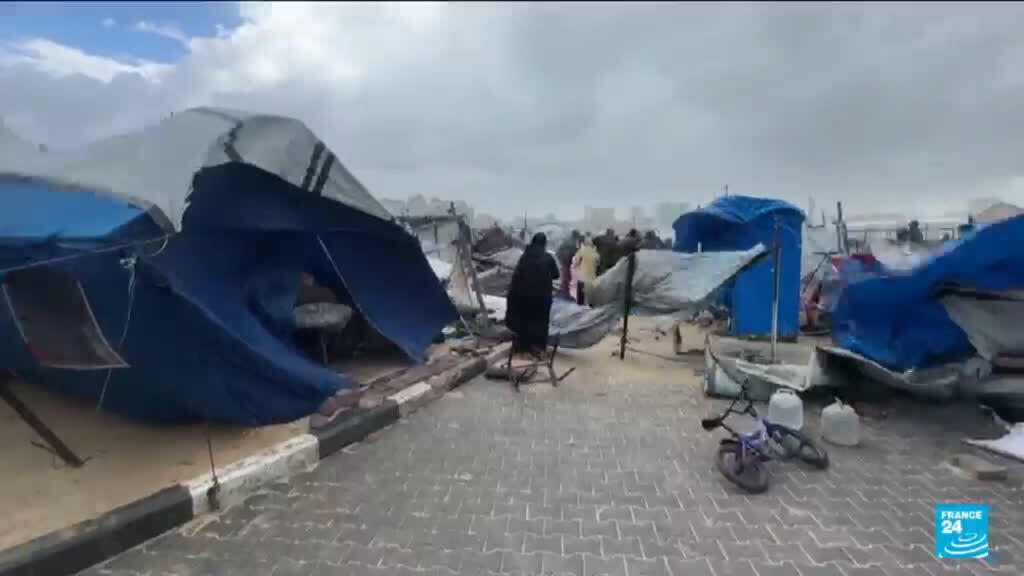
Despite the ceasefire, conditions in Gaza remain perilous for many residents, with UNICEF reporting that more than 100 children have been killed by military action since the truce began. Large numbers of people are living in makeshift tent camps that offer little protection from harsh weather, while many buildings remain structurally unsafe following Israeli bombardments. On Tuesday, at least four people were killed when a wall collapsed onto their tent in Gaza. Ellen Gainsford reports.

50m
3 min
0
Read Article
Meta's Strategic Pivot: Reality Labs Cuts
Technology

Meta's Strategic Pivot: Reality Labs Cuts

Meta is restructuring its Reality Labs division, cutting approximately 1,000 jobs. The move signals a major strategic shift away from metaverse ambitions toward AI-powered wearables and mobile products, reshaping the company's future.

51m
5 min
4
Read Article
Dilbert Creator Scott Adams Dies at 68
Entertainment

Dilbert Creator Scott Adams Dies at 68

The American cartoonist behind the iconic office satire Dilbert has passed away at the age of 68. Adams, who battled prostate cancer, leaves behind a complicated legacy defined by his sharp wit and a 2023 controversy.

52m
5 min
6
Read Article
🎉

You're all caught up!

Check back later for more stories

Back to Home