Key Facts
- ✓ Citadel CEO Ken Griffin characterized President Trump's tariff policies as having left the US economy in a 'pretty unfortunate position' with disrupted trade relationships.
- ✓ The administration's tariff regime has created significant uncertainty for businesses, making it difficult to justify major manufacturing investments without policy clarity.
- ✓ Griffin noted that while tariffs have had some intended effects, manufacturing jobs have not yet returned to the United States as promised during the campaign.
- ✓ The billionaire investor warned that closing the Southern border has resulted in the loss of a substantial labor supply that previously helped control inflation through low-wage work.
- ✓ Griffin emphasized that restrictive immigration policies could mean losing access to the 'best and brightest minds from around the world,' noting that most Silicon Valley leaders are immigrants or children of immigrants.
- ✓ The Citadel CEO expressed confusion over the administration's dispute with Europe over Greenland, questioning the strategic value of 'fighting over a piece of rock covered by ice.'
Quick Summary
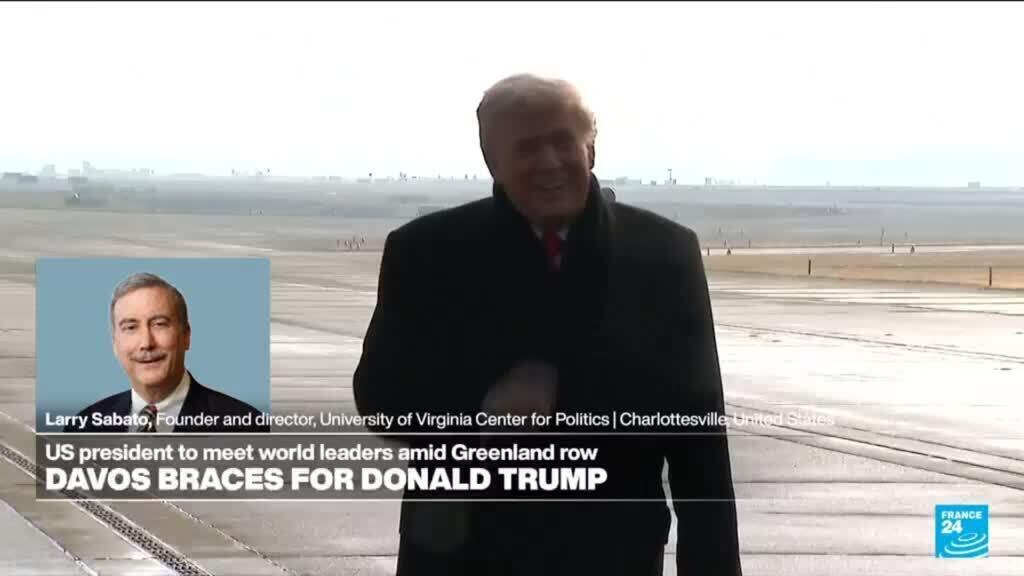
Hours before President Donald Trump's highly anticipated speech at the World Economic Forum, Ken Griffin, the outspoken billionaire CEO of Citadel, delivered a critical assessment of the administration's key economic policies. Speaking from Davos, Griffin offered a blunt analysis of how tariffs and immigration changes are reshaping the American business landscape.
The hedge fund executive's comments come at a pivotal moment for global markets, with business leaders closely watching how US trade and immigration policies will evolve. Griffin's assessment provides a rare glimpse into how major financial players view the administration's economic direction.
Tariffs and Trade Disruption
Griffin characterized President Trump's tariff policies as having been "a negative" for the economy, arguing that they have left the United States in a "pretty unfortunate position." The policy to raise tariffs on imports has fundamentally altered long-standing trading relationships while simultaneously driving up inflation across the economy.
Perhaps most concerning for business leaders is the uncertainty surrounding how long these tariffs will remain in place. Griffin emphasized that this lack of clarity creates a significant barrier to long-term investment planning.
"Before you spend hundreds of millions of dollars or billions of dollars to build a manufacturing plan, you really want to believe that the policy that is the anchor of that decision will be permanent in nature."
The Citadel CEO also pointed to a troubling side effect of the tariff regime: increased "cronyism" in Washington. He noted that corporate CEOs have been lining up to argue for exemptions for their businesses, with many successfully securing special treatment.
""Trump's tariffs have been 'a negative' and have left the US economy in a 'pretty unfortunate position'""
— Ken Griffin, Citadel CEO
Manufacturing Promises Unfulfilled
Central to President Trump's economic platform has been the promise that tariffs would bring manufacturing jobs back to American shores, reducing dependency on foreign nations for critical items. However, Griffin offered a sobering assessment of this goal's progress.
"We have yet to bring manufacturing jobs back to the United States," Griffin stated bluntly. While he acknowledged that tariffs have had some of their intended effects, he did not specify what those positive outcomes have been.
The billionaire investor did note that President Trump is clearly following through on the platform he was elected on, suggesting that the administration is delivering on its campaign promises even if the economic results remain mixed. This creates a complex picture for business leaders trying to navigate the new economic landscape.
Immigration Policy Impact
Griffin's critique extended beyond trade policy to immigration, where he offered a nuanced perspective on the administration's approach. While stating that "no country's borders should be open to mass immigration," he warned that closing the Southern border has resulted in the loss of a substantial labor supply.
The economic consequences of this labor shortage are already becoming apparent. Griffin explained that the workers who previously crossed the border performed "very, very difficult work" for "very modest wages," which helped keep inflation in check. He predicted that housing and food prices would likely rise in the coming years as a direct result of this labor contraction.
Perhaps more concerning for long-term American competitiveness, Griffin warned that restrictive immigration policies could mean "we're potentially losing access to the best and brightest minds from around the world." He pointed to Silicon Valley as a prime example, noting that the majority of its leading companies are either run by immigrants or children of immigrants, and that these businesses have created "a tremendous number of jobs in the United States."
Geopolitical Tensions
Griffin also expressed confusion and concern over the administration's recent geopolitical maneuvers, particularly the dispute with Europe over Greenland. The Citadel CEO questioned the strategic value of the conflict, asking: "What I can't understand is why are we fighting over a piece of rock covered by ice?"
He suggested that the administration's approach has "frayed our relationship with our European allies in ways that I don't understand or appreciate." However, he acknowledged that there appears to be a broader strategy at play, with a "push here to get Europe to step up" on various international matters.
During his subsequent speech at Davos, President Trump clarified that he would not use force to acquire Greenland, though he maintained that he wants "right, title, and ownership" of the nation. This clarification came after Griffin's comments highlighted the confusion surrounding the administration's intentions.
Looking Ahead
Ken Griffin's assessment from Davos provides a comprehensive view of how major financial players are interpreting the administration's economic policies. His critique highlights the tension between campaign promises and economic reality, particularly regarding manufacturing job creation.
The uncertainty surrounding tariff policies remains a critical concern for business leaders considering long-term investments. Without clarity on the permanence of these policies, major capital allocation decisions become increasingly difficult to justify.
Meanwhile, the immigration debate presents a complex trade-off between border security and economic growth. Griffin's analysis suggests that while the administration may be achieving certain political goals, the economic consequences could include higher prices and reduced access to global talent.
As markets continue to digest these policies, Griffin's voice adds to the growing chorus of business leaders calling for more predictable and stable economic frameworks. The coming months will likely reveal whether these concerns translate into policy adjustments or if the current trajectory continues.
""We've obviously increased the amount of cronyism in America as corporate CEOs have lined up in Washington trying to argue why their business should be exempted from tariffs, and many have prevailed""
— Ken Griffin, Citadel CEO
""We have yet to bring manufacturing jobs back to the United States""
— Ken Griffin, Citadel CEO
""I think people have a very hard time believing that the current tariff regime's going to persist""
— Ken Griffin, Citadel CEO
""These are people who did a lot of very, very difficult work, very modest wages, which helped to reduce the level of inflation in the United States""
— Ken Griffin, Citadel CEO
""We're potentially losing access to the best and brightest minds from around the world""
— Ken Griffin, Citadel CEO
""The majority of Silicon Valley is either run by immigrants or children of immigrants""
— Ken Griffin, Citadel CEO
""What I can't understand is why are we fighting over a piece of rock covered by ice?""
— Ken Griffin, Citadel CEO
""We have frayed our relationship with our European allies in ways that I don't understand or appreciate, but there is a push here to get Europe to step up""
— Ken Griffin, Citadel CEO