M
MercyNews
Home
Back
How Nicolás Maduro Consolidated Power in Venezuela
Politics

How Nicolás Maduro Consolidated Power in Venezuela

A documentary reveals how Nicolás Maduro used repression and propaganda to become an authoritarian ruler in Venezuela, maintaining power despite internal and external pressures.

G1 GloboJan 5
5 min read
📋

Quick Summary

  • 1Nicolás Maduro rose from a bus driver in Caracas to the presidency of Venezuela, succeeding Hugo Chávez.
  • 2Over 12 years, he consolidated power through repression and propaganda.
  • 3A documentary featuring interviews with former allies turned adversaries details his authoritarian trajectory.
  • 4Maduro's rule has been marked by the persecution of opponents, including former officials like Rafael Ramírez and General Manuel Figuera.

Contents

Origins and Rise to PowerConsolidation of Power and RepressionEconomic Crisis and International PressurePropaganda and Political Survival

Quick Summary#

Nicolás Maduro's journey from a bus driver to Venezuela's authoritarian leader is detailed in a new documentary. The film features testimony from former allies who were later persecuted. Over his 12-year tenure, Maduro has utilized repression and propaganda to centralize control.

His rise began with the Partido Socialista and training in Cuba. Following the death of Hugo Chávez, Maduro faced internal distrust but quickly moved to consolidate power. He utilized intelligence services to monitor opponents and forced many former allies into exile. Despite a crumbling economy and international sanctions, his regime has survived, recently regaining geopolitical relevance due to shifts in global energy markets.

1. Origins and Rise to Power#

In the 1990s, Nicolás Maduro was a motorista de ônibus (bus driver) navigating the streets of Caracas. His political ascent began when he joined the Partido Socialista and was sent to Cuba to study under Fidel Castro. Decades later, he would apply those lessons as the president of a nation possessing the world's largest oil reserves.

Maduro stood by Hugo Chávez from the very beginning of the Bolivarian revolution. Following Chávez's death, he was chosen as the successor. The transition occurred after a period of significant social spending fueled by oil wealth. According to former Oil Minister Rafael Ramirez, the era saw poverty drop from 70% to 7%.

As Foreign Minister under Chávez, Maduro forged alliances with Cuba, Russia, and Iran. When Chávez's health failed, he designated Maduro as his successor, paving the way for Maduro's presidency.

"Nós diminuímos a pobreza de 70% para 7%. Foram avanços sociais importantes."
— Rafael Ramirez, Former Oil Minister

2. Consolidation of Power and Repression#

Maduro's presidency began with a narrow electoral margin, leading to internal suspicion. To secure his position, he appointed General Manuel Figuera to lead intelligence. Figuera later described the agency's transformation into a police state mechanism.

According to Figuera, Maduro ordered the surveillance of all opponents, desiring to know everything they were doing. Figuera stated, "Era pra ele como a GESTAPO estava para o Hitler" (For him, it was like the Gestapo was to Hitler). The repression extended even to former allies.

Rafael Ramirez, a former minister, was persecuted and forced into exile. Ramirez recounted, "Ele mandou me prenderem. Porque ele achou que eu era uma pessoa que poderia tomar o lugar dele. Ele invadiu minha casa e me forçou a me exilar" (He ordered me arrested. Because he thought I was someone who could take his place. He invaded my house and forced me into exile).

After losing the parliamentary majority in 2015, Maduro intensified control. Former Attorney General Luisa Ortega, once a regime defender, broke ranks to denounce abuses. She claimed that more than 8,000 Venezuelans were executed by police and the military.

3. Economic Crisis and International Pressure#

The decline of the state oil company PDVSA, plagued by corruption and lack of maintenance, coincided with U.S. sanctions. The decline is visible in the Lake Maracaibo region, the cradle of Venezuelan oil, where residents recall the golden era little.

The United States detected this instability. In 2016, Donald Trump attempted to remove Maduro by supporting Juan Guaidó as the "legitimate president," but the effort failed. Former National Security Advisor John Bolton suggested that Maduro likely wanted to leave but was stopped by foreign allies.

Bolton stated, "Acho que maduro e sua mulher queriam ir embora. Mas os russos e cubanos os mandaram ficar. Porque sabiam que se ele saísse o regime colapsaria muito rapidamente" (I think Maduro and his wife wanted to leave. But the Russians and Cubans ordered them to stay. Because they knew that if he left the regime would collapse very quickly).

The geopolitical landscape shifted with the war in Ukraine. As sanctions were applied to Russian oil, President Joe Biden suspended restrictions on Venezuelan oil. This move restored Maduro's relevance on the international stage, leading the West to re-engage with him, even as Donald Trump eyes a return to office to lower U.S. fuel prices.

4. Propaganda and Political Survival#

Despite threats and economic turmoil, Maduro has maintained power through a combination of luck and heavy investment in propaganda. His administration has actively worked to craft an image of him as a defender of the people.

A notable example of this strategy is the creation of an animated superhero named “Super Bigode” (Super Mustache). This character serves to reinforce Maduro's political image. As Venezuela looks to the future, the population faces the question of whether they will continue to defend their "hero" or turn the page on this chapter of history.

"Ele passou a usar essa força como polícia política. Era pra ele como a GESTAPO estava para o Hitler."
— Manuel Figuera, Former Intelligence Chief
"Ele mandou me prenderem. Porque ele achou que eu era uma pessoa que poderia tomar o lugar dele. Ele invadiu minha casa e me forçou a me exilar."
— Rafael Ramirez, Former Oil Minister
"Mais de oito mil venezuelanos foram executados pela polícia e pelo Exército."
— Luisa Ortega, Former Attorney General
"Acho que maduro e sua mulher queriam ir embora. Mas os russos e cubanos os mandaram ficar. Porque sabiam que se ele saísse o regime colapsaria muito rapidamente."
— John Bolton, Former National Security Advisor

Frequently Asked Questions

Nicolás Maduro started as a bus driver in Caracas. He joined the Socialist Party, received training in Cuba, and became a close ally of Hugo Chávez. He served as Foreign Minister and was chosen by Chávez as his successor.

Maduro used repression, surveillance of opponents, and propaganda. He turned the intelligence agency into a police force to monitor enemies and created propaganda tools like the animated superhero 'Super Bigode.'

While the U.S. under Donald Trump imposed sanctions to try to oust him, the Biden administration suspended restrictions on Venezuelan oil due to the war in Ukraine and sanctions on Russian oil, restoring Maduro's international relevance.

#G1

Continue scrolling for more

AI Transforms Mathematical Research and Proofs
Technology

AI Transforms Mathematical Research and Proofs

Artificial intelligence is shifting from a promise to a reality in mathematics. Machine learning models are now generating original theorems, forcing a reevaluation of research and teaching methods.

Just now
4 min
170
Read Article
Galaxy Compares DeFi Provisions in Crypto Bill to Patriot Act Surveillance
Cryptocurrency

Galaxy Compares DeFi Provisions in Crypto Bill to Patriot Act Surveillance

Galaxy said that new Treasury authorities in a Senate draft could mark the largest surveillance expansion since 2001.

1h
3 min
0
Read Article
Astronautas da Nasa iniciam missão de retorno à Terra após volta antecipada por 'problema de saúde'
Science

Astronautas da Nasa iniciam missão de retorno à Terra após volta antecipada por 'problema de saúde'

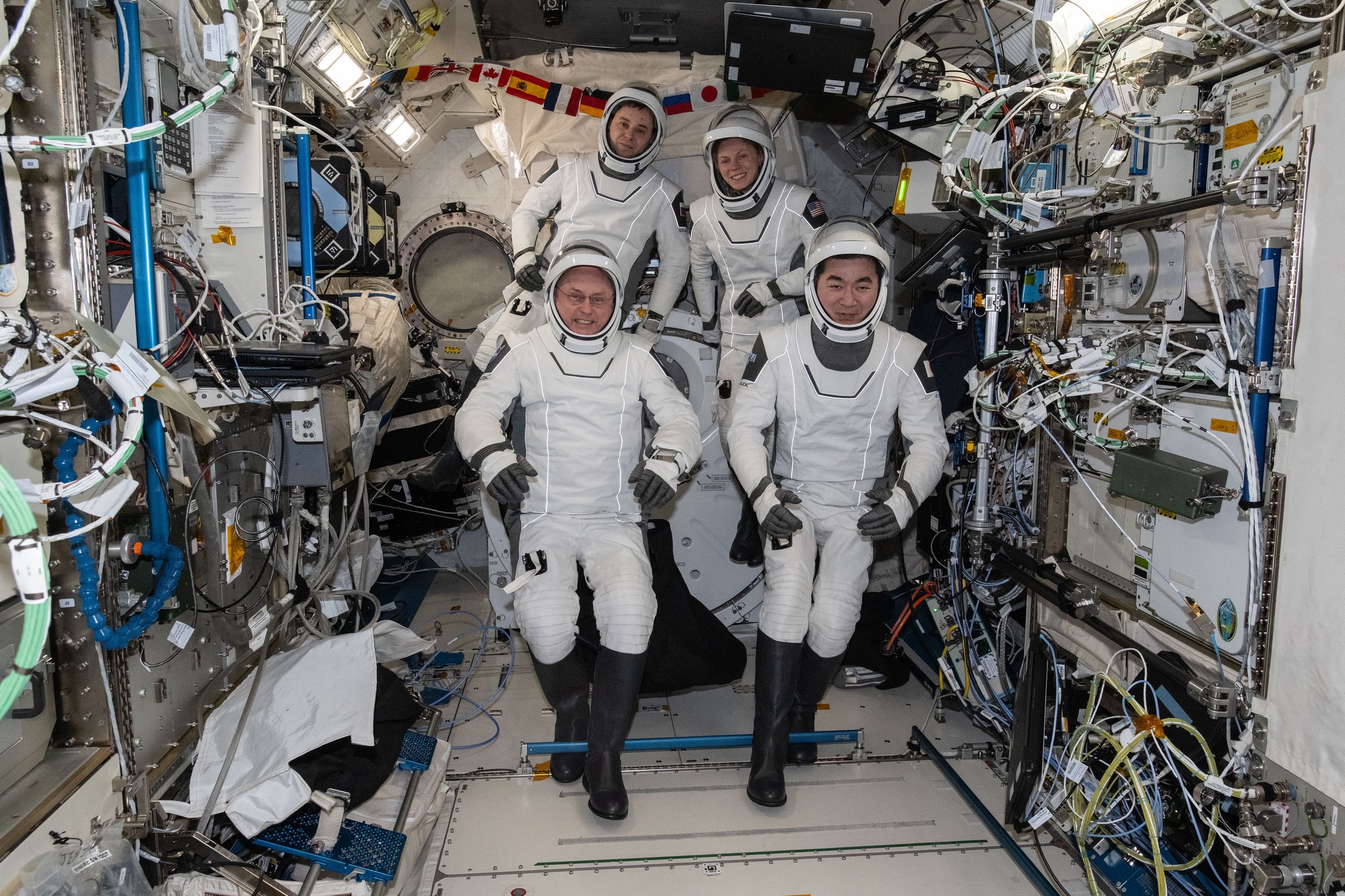
Astronautas do Crew-11 se preparam para retorno à Terra. Estação Espacial Internacional/Nasa Quatro membros de uma tripulação da Nasa a bordo da Estação Espacial Internacional (ISS, na sigla em inglês) devem iniciar nesta quarta-feira (14) o processo de retorno à Terra após um problema de saúde afetar um dos astronautas. A missão com os astronautas Zena Cardman e Mike Fincke, da agência espacial americana, Kimi Yui, da Agência de Exploração Espacial do Japão (JAXA), e o cosmonauta da Roscosmos, Oleg Platonov, deve pousar no mar da costa da Califórnia na madrugada de quinta-feira (15). A Nasa anunciou na última semana a decisão de antecipar o retorno da equipe para preservar à saúde do tripulante que vive e trabalha no laboratório orbital. (relembre abaixo) A agência não divulgou o nome do astronauta nem a condição médica, alegando privacidade, mas afirmou que o quadro é estável. Com a partida dos quatro integrantes – o chamado Crew-11 da SpaceX – a Expedição 74 ainda vai permanecer com três tripulantes na estação orbital. Cronograma da volta à Terra Retrato oficial dos quatro membros da missão Crew-11 da SpaceX, da Nasa, a bordo da Estação Espacial Internacional. Da esquerda para a direita: o cosmonauta da Roscosmos Oleg Platonov; o astronauta da Nasa, Mike Fincke; a astronauta da JAXA (Agência de Exploração Aeroespacial do Japão) e a astronauta da Nasa, Zena Cardman. Nasa/Robert Markowitz Após determinar o retorno antecipado da tripulação à Terra, a Nasa definiu o cronograma para essa volta. 🚀A previsão é que os astronautas saiam da estação espacial na tarde desta quarta, a bordo da espaçonave Dragon, da SpaceX. O pouso no mar está previsto para a madrugada de quinta. Veja abaixo o cronograma completo, no horário de Brasília: Quarta-feira (14) 17h30 – Fechamento da escotilha 19h – Desacoplamento Quinta-feira (15) 4h50 – Manobra de desorbitação 5h40 – Pouso na água Retorno antecipado A Nasa anunciou na quinta-feira (8) que iria antecipar o retorno de uma tripulação de quatro pessoas a bordo da ISS após um problema de saúde com um dos astronautas. Na quarta-feira (7), a agência espacial cancelou abruptamente uma caminhada espacial que ocorreria na quinta, quando dois astronautas fariam uma saída da ISS. A decisão de trazer a tripulação de volta antecipadamente foi anunciada pelo administrador da Nasa, Jared Isaacman, e outros funcionários da agência em uma entrevista coletiva. Eles deram poucos detalhes, mas disseram que o problema de saúde não estava relacionado a operações espaciais e não se tratava de uma lesão. Esta é a primeira evacuação antecipada na história da ISS, que abriga astronautas de forma contínua desde 2000. De acordo com Isaacman, o retorno não é uma evacuação de emergência, mas sim uma decisão tomada devido a um "risco persistente". Os quatro astronautas estão em missão desde 1º de agosto. As expedições normalmente duram cerca de seis meses, portanto, o retorno à Terra estava previsto para as próximas semanas. O administrador associado da Nasa, Amit Kshatriya, também afirmou que esta é a primeira vez que eles realizam uma "evacuação médica controlada da estação. Portanto, isso é incomum."

1h
3 min
0
Read Article
Mainland Chinese money to drive 10% rise in Hong Kong commercial property deals: Colliers
Economics

Mainland Chinese money to drive 10% rise in Hong Kong commercial property deals: Colliers

Surging mainland Chinese investment in Hong Kong’s commercial real estate sector has helped set the stage for a “measured recovery” in 2026, according to Colliers. Investment from the mainland rose to the highest level in five years in the last quarter of 2025, and deal value in 2026 was set to increase by 10 per cent, Colliers said. In the luxury residential segment, mainland capital accounted for about 80 per cent of transactions exceeding HK$100 million on The Peak and in Southern district,...

1h
3 min
0
Read Article
Hong Kong’s John Lee to open new Legco’s first meeting with Tai Po fire on agenda
Politics

Hong Kong’s John Lee to open new Legco’s first meeting with Tai Po fire on agenda

This story has been made freely available as a public service to our readers. Please consider supporting SCMP’s journalism by subscribing. Get faster notifications on the latest updates by downloading our app. Hong Kong’s new Legislative Council will hold its first meeting on Wednesday, with lawmakers set to focus on follow-up actions after last year’s Tai Po fire that claimed at least 161 lives. Chief Executive John Lee Ka-chiu will address the new batch of 90 lawmakers, followed by a...

1h
3 min
0
Read Article
Technology

Meta Pivots to AI, Cuts VR Jobs

Meta has initiated significant layoffs within its Reality Labs division and shuttered multiple VR studios. This strategic move signals a major pivot towards artificial intelligence, redirecting company resources and focus.

3h
4 min
7
Read Article
Starmer's Government Faces Mounting Policy Reversals
Politics

Starmer's Government Faces Mounting Policy Reversals

The government dropping the digital ID scheme's mandatory element is another climbdown for Downing Street. This marks a growing pattern of policy reversals under the current administration.

3h
5 min
7
Read Article
China Warns of Foreign Mapping Operations Targeting Geodata
Politics

China Warns of Foreign Mapping Operations Targeting Geodata

China's top counter-espionage agency has issued a stark warning regarding overseas entities attempting to steal the country's geographic data through covert mapping operations.

3h
3 min
9
Read Article
Kiefer Sutherland Arrested After Altercation
Entertainment

Kiefer Sutherland Arrested After Altercation

The '24' star was taken into custody by the Los Angeles Police Department following an incident near Sunset Boulevard and Fairfax Avenue. Authorities responded to a call regarding an assault.

3h
3 min
8
Read Article
Politics

Trump Issues Stark Warning to Iran

US President Donald Trump has issued a direct warning to Iran, demanding the nation 'show humanity' or prepare for 'very strong action' amid growing tensions.

3h
5 min
8
Read Article
🎉

You're all caught up!

Check back later for more stories

Back to Home