M
MercyNews
Home
Back
Growing Up in a Large Foster Family
Society

Growing Up in a Large Foster Family

Business InsiderDec 28
3 min read
📋

Key Facts

  • ✓ The author is the oldest of eight siblings, including five adopted from foster care.
  • ✓ The family is racially diverse, consisting of Black, Hispanic, and white children.
  • ✓ The author took on significant household chores from a young age, including babysitting and laundry.
  • ✓ She developed a scarcity mindset that influenced her early entrepreneurial efforts, such as using Airbnb.

In This Article

  1. Quick Summary
  2. A Family Built Through Foster Care
  3. Navigating Public Perception and Empathy
  4. Lessons in Teamwork and Scarcity
  5. Parenting and Family Gatherings

Quick Summary#

The author shares her perspective as the oldest of eight siblings, a family unit that expanded from three biological children to include five adopted foster siblings. She describes a household that was often busy and chaotic, yet filled with love. Growing up, she frequently encountered stares and unsolicited questions from strangers trying to understand her racially diverse family, which ultimately taught her to value empathy and accept imperfection.

Life in the large family required immediate teamwork and responsibility. The author recalls specific chores she took on at young ages, such as managing bedtime routines for toddlers at 11 and doing the family laundry by 17. This environment fostered a scarcity mindset, a feeling that resources were limited and one must act fast to get their share. While this was a difficult habit to unlearn as an adult, it also made her scrappy and resourceful. She eventually became a mother herself, finding that the chaos of parenting was familiar and manageable. The family's defining characteristic remains its openness to including others, always making room for one more at the table.

A Family Built Through Foster Care#

The family structure began with just three children: the author, her biological brother, and her biological sister. They described themselves as an average American, blue-collar family. This dynamic changed significantly when the author's parents decided to foster children. The household size began to fluctuate, usually housing between four and six children at any given time. Over the years, the family grew permanently as the parents adopted five of the foster siblings, bringing the total number of children to eight.

Growing up as the oldest in a family built through foster care and adoption shaped the author's worldview in ways she did not fully understand at the time but recognizes clearly now. The experience of being part of a large, blended family was defining, creating a unique upbringing that differed from the traditional nuclear family model. The transition from a small family of three to a bustling home of eight required significant adjustments for everyone involved.

"I love that she never felt she owed anyone an explanation for her children."

— Author

Navigating Public Perception and Empathy#

One of the most vivid memories for the author is the reaction of strangers to her family's appearance. The siblings represented a mix of Black, Hispanic, and white heritage, which often confused onlookers in public spaces like grocery stores. Strangers would stop the mother to comment on her "beautiful family," often hoping for an explanation of how they all belonged together. The mother never offered an explanation, a stance the author deeply admires as it reinforced the idea that the family did not owe anyone an account of their existence.

The author was old enough to notice the disapproving looks when her younger siblings acted out, such as when a 2-year-old foster sister dumped eggs or had a tantrum in the cereal aisle. Being labeled as "that family" was humbling, but in hindsight, it taught the author empathy at an early age. She learned to be aware of others who felt they were not fitting in or measuring up to societal standards, striving to create a space where people could be their imperfect selves.

Lessons in Teamwork and Scarcity#

Managing a household with so many children required everyone to contribute. The author vividly remembers the chores that became necessary after her foster siblings arrived. Her mother became overwhelmed, and helping out became non-negotiable. By age 11, the author was in charge of the bedtime routine for her 1- and 2-year-old sisters. By 12, she was the designated dishwasher, and by 17, she managed the laundry. She also babysat regularly. Every day was a lesson in teamwork, a skill that many of the siblings carried into their adult lives, with several pursuing entrepreneurship.

Another significant lesson was the development of a scarcity mindset. With so many siblings, the author learned to act fast or risk missing out on resources. She had to consciously unlearn this behavior as an adult, training herself not to overfill her plate or worry about things running out. However, this mindset also made her scrappy and resourceful. When she needed extra money early in her marriage, she bought and sold furniture on Craigslist and rented out her home on Airbnb. Her resourcefulness was so notable that her book club voted her "most likely to survive the Hunger Games."

Parenting and Family Gatherings#

Unlike many of her friends who dreamed about future families, the author was hesitant about becoming a mother. She was already intimately familiar with the demands of raising children, having witnessed the "snot-nosed temper tantrums" and chaos of a large household. She eventually changed her mind and became a mother herself. She finds that the chaos of parenting does not surprise her, and she remains relaxed about things that worry other parents, such as balls in the house or children playing in the mud.

Today, the author cherishes the loud, boisterous family gatherings that include her seven siblings, their spouses, and extended family. She describes the atmosphere as "wonderful chaos." The family maintains an open-door policy; whenever she asks to bring a lonely neighbor or another family to a gathering, her mother always agrees, saying, "Of course! I'll make sure we have enough chairs." This inclusivity is the author's favorite part of belonging to a big family.

"My mother taught me that you let your heart hurt if it means you can help the hurting."

— Author

"Of course! I'll make sure we have enough chairs."

— Mother

Continue scrolling for more

AI Transforms Mathematical Research and Proofs
Technology

AI Transforms Mathematical Research and Proofs

Artificial intelligence is shifting from a promise to a reality in mathematics. Machine learning models are now generating original theorems, forcing a reevaluation of research and teaching methods.

Just now
4 min
175
Read Article
Putin's Ukraine Focus Exposes Global Allies
Politics

Putin's Ukraine Focus Exposes Global Allies

A year into the Ukraine conflict, Moscow's authoritarian partners are discovering their security ties to Russia may be little more than a paper tiger, with support failing to materialize when most needed.

30m
5 min
6
Read Article
Animoca Acquires Somo as NFT Market Rebounds
Technology

Animoca Acquires Somo as NFT Market Rebounds

In a significant move for the digital assets landscape, Animoca Brands has acquired Somo, signaling renewed confidence in the NFT market as trading activity shows early signs of recovery.

33m
5 min
1
Read Article
China's much-hyped radars appear to have been of little help when the US launched its massive air assault against Venezuela
World_news

China's much-hyped radars appear to have been of little help when the US launched its massive air assault against Venezuela

China's JY-27A radar didn't appear to be effective during the US raid on Venezuela. US Air Force Photo Venezuela's Chinese air defense radars weren't game-changing during the US raid to capture Maduro. China has touted the effectiveness in combat of radars like its JY-27A. The lack of effect recently raises questions about both the radar and their operators. Venezuela's military had Chinese-made anti-aircraft radars available when the US launched a surprise air assault against the country to capture the country's now-former leader, Nicolás Maduro, earlier this month. They appear to have been of little help. Operation Absolute Resolve involved over 150 US military aircraft, none of which were shot down. A helicopter was hit, reportedly by machine gun fire, but remained operational. Venezuela has a number of China's JY-27A mobile radars, which Beijing has touted as top-of-the-line systems. It has said the radar can detect stealth assets, like the American F-22 and F-35, from over 150 miles away. The success of the surprise raid by US special operators into downtown Caracas, part of a larger mission which involved not only stealth airpower but also older fourth-generation aircraft and helicopters, suggests that something didn't go as planned on defense. That may be on the operators rather than the tech though. After the raid, a Japanese reporter asked a Chinese foreign ministry spokesperson what Beijing thought about the "large amount of military equipment" China sold Venezuela apparently being "of little practical use." The Chinese spokesperson responded by condemning the US strike. A destroyed air defense unit at a Venezuelan military base. Leonardo Fernandez Viloria/REUTERS The Chinese-made JY-27A is a long-range radar used for detecting and tracking hostile aircraft in protected airpsace. Introduced in 2014, the radar system consists of a radar mast with multiple antenna panels supported by separate radar and control vehicles. Chinese sources claim it has features designed to reduce jamming. A newer version, the JY-27V, has since been developed. When Venezuela purchased JY-27As from China last year, there were claims that the radars were able to lock onto multiple F-35B fighter jets off the Venezuelan coast, presenting a potential challenge to the one-way transparency advantage of the US military. "That's all well and good," Michael Sobolik, a senior fellow at the Hudson Institute, told Business Insider, "but when it really matters is in a moment of conflict." Perhaps they were unable to withstand sophisticated electromagnetic spectrum attacks, or maybe they were improperly utilized by their operators. Either way, if they weren't effective, they were of little use for air defense. Radar systems are what inform air defense crews on what they'll need to target and what weapons they need to use. "If you don't have functioning radars then you're a sitting duck," he said. US military leaders said that American aircraft were able to overwhelm Venezuelan air defenses, which has been assessed to include a range of Russian-made systems like S-300VM batteries, Buk-M2 systems, and older S-125 Pechora-2M launchers, as well as the Chinese radars. Some of these pieces are capable but aren't the newest variants used by their respective exporters. In the aftermath, Secretary of Defense Pete Hegseth mocked the effectiveness of the Russian air defenses. Nothing was said about the Chinese radars in that speech. Key to air defense is how the network works together, and the effectiveness of the operator is vital. In Venezuela's case, it may have been lacking the necessary conditions for successful air defense operations. Seven US troops were hurt during the raid in Venezuela over the weekend, a defense official said. US Air Force photo by Airman 1st Class Isabel Tanner A study from the Miami Strategic Intelligence Institute think tank, which hosts experts on Latin America, assessed Venezuela's air defenses as being in critical condition as of last year. It said that over 60% of its radar fleet was non-operational, combat aviation doesn't fly often, and the country has received little maintenance support and spare parts from its exporters. Venezuela purchased Chinese-made radars and Russian-made surface-to-air missile batteries to modernize its air defenses, but the hardware alone can't make up for internal shortcomings. Analysis by The New York Times found that some of Venezuela's air defense equipment was in storage or not operational, leaving it unprepared for the US attack. Reports also indicated Venezuela's military lacked the spare parts and technical background to keep air defense systems running. Even if the failures are on the part of the Venezuelan military, the ineffective performance of the Russian and Chinese systems sends a "pretty big message," Sobolik said. It elevates confidence in US capabilities while raising questions about those of rivals. US officials said no American aircraft or military personnel were lost during the raid on Venezuela. Of the 150 aircraft and almost 200 American troops involved in the mission, one helicopter took fire and seven troops were injured. Read the original article on Business Insider

36m
3 min
0
Read Article
AI Resistance? The 4-Day Workweek Solution
Technology

AI Resistance? The 4-Day Workweek Solution

As companies invest millions in AI, many workers resist the technology. Authors of a new book argue that sharing efficiency gains through a shorter workweek could be the key to adoption.

39m
5 min
5
Read Article
François de Rugy Endorses Right-Wing Candidate in Nantes
Politics

François de Rugy Endorses Right-Wing Candidate in Nantes

In a significant political realignment, François de Rugy, a former prominent figure on the French left, has announced his support for the right-wing candidate Foulques Chombart de Lauwe in the upcoming Nantes municipal elections.

41m
5 min
6
Read Article
Galaxy warns Senate crypto bill gives US Treasury massive surveillance power
Politics

Galaxy warns Senate crypto bill gives US Treasury massive surveillance power

Galaxy says the draft crypto market structure bill would give the US Treasury new powers to freeze transactions and deploy Patriot Act–style measures.

44m
3 min
0
Read Article
Gaza: Hypothermia kills 5 as blockade hinders aid
World_news

Gaza: Hypothermia kills 5 as blockade hinders aid

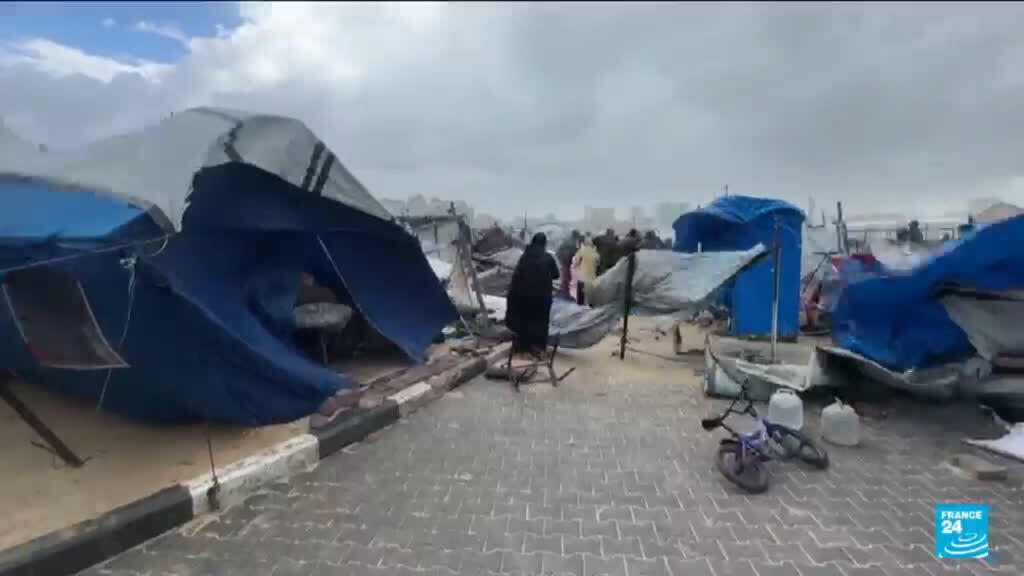
Despite the ceasefire, conditions in Gaza remain perilous for many residents, with UNICEF reporting that more than 100 children have been killed by military action since the truce began. Large numbers of people are living in makeshift tent camps that offer little protection from harsh weather, while many buildings remain structurally unsafe following Israeli bombardments. On Tuesday, at least four people were killed when a wall collapsed onto their tent in Gaza. Ellen Gainsford reports.

52m
3 min
0
Read Article
From California to Texas: A New Life in Austin
Lifestyle

From California to Texas: A New Life in Austin

A corporate communications lead shares his journey from the Golden State to the Lone Star State, finding affordability, nature, and a vibrant community.

53m
5 min
12
Read Article
Dilbert Creator Scott Adams Dies at 68
Entertainment

Dilbert Creator Scott Adams Dies at 68

The American cartoonist behind the iconic office satire Dilbert has passed away at the age of 68. Adams, who battled prostate cancer, leaves behind a complicated legacy defined by his sharp wit and a 2023 controversy.

53m
5 min
6
Read Article
🎉

You're all caught up!

Check back later for more stories

Back to Home