M
MercyNews
Home
Back
Greenland Caught in Trump-Europe Standoff
Politics

Greenland Caught in Trump-Europe Standoff

ABC News4h ago
3 min read
📋

Key Facts

  • ✓ Naleraq party leader Pele Broberg has publicly warned that Greenland risks becoming a 'stepping stone' in international political conflicts.
  • ✓ The island's political positioning is increasingly influenced by global opposition to Donald Trump, according to Broberg's assessment.
  • ✓ Greenland operates with considerable autonomy from Denmark while sharing foreign policy responsibilities, creating unique vulnerabilities in international disputes.
  • ✓ The Naleraq party represents a significant voice in Greenlandic politics with a focus on independence and self-determination.
  • ✓ Broberg's comments reflect growing concerns among Greenlandic leadership about the territory's ability to chart its own course amid external pressures.
  • ✓ The situation underscores the complex intersection of local politics and global power dynamics for autonomous territories.

In This Article

  1. Quick Summary
  2. The Warning
  3. Geopolitical Context
  4. Political Implications
  5. Looking Forward

Quick Summary#

Greenland finds itself at the center of a geopolitical storm as international tensions escalate. The island's political leadership is raising alarms about its role in global conflicts.

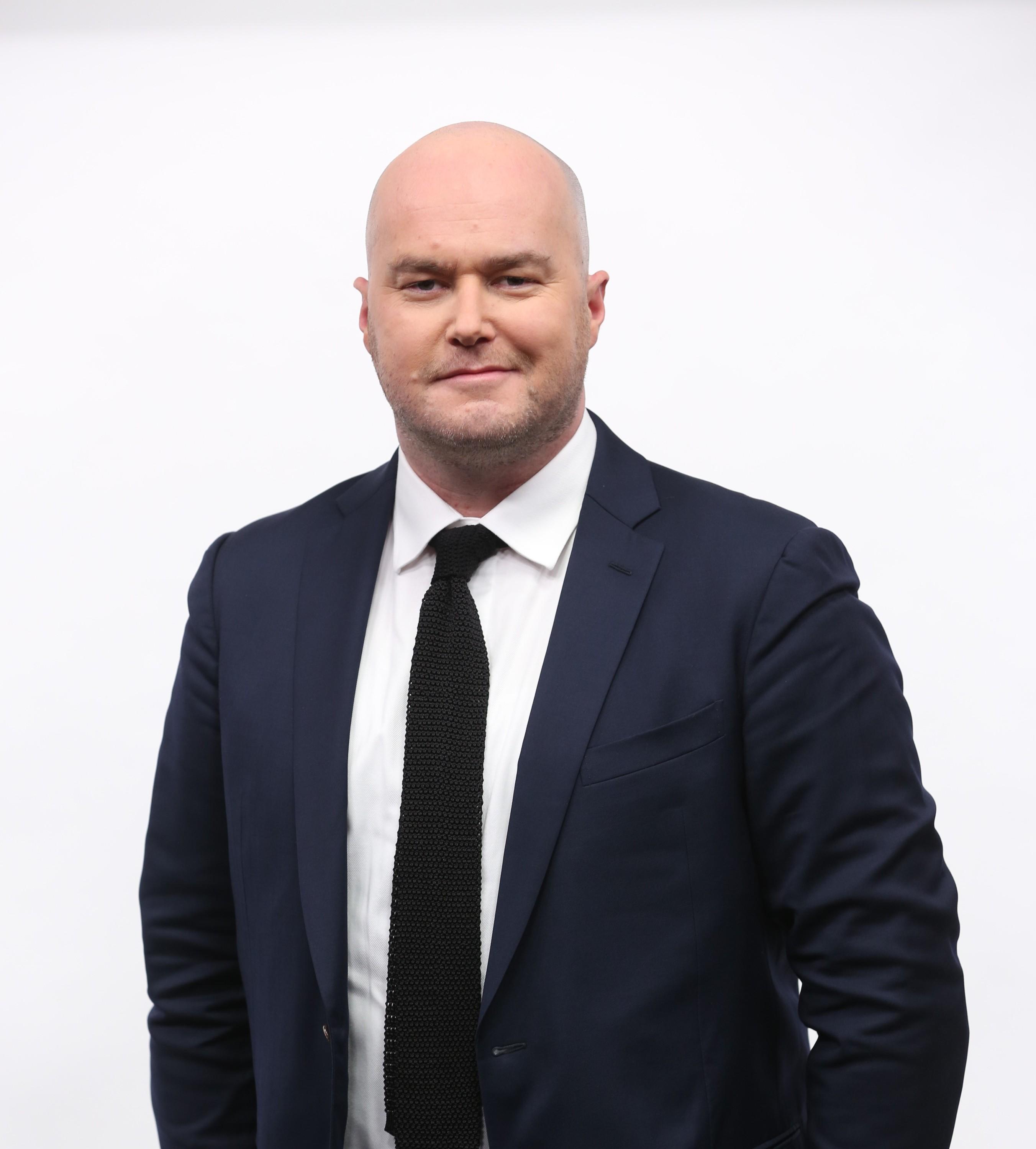
Naleraq party leader Pele Broberg has issued a stark warning: Greenland risks becoming a mere 'stepping stone' in political battles driven by opposition to Donald Trump. This development marks a significant shift in how the autonomous territory navigates its complex relationship with both Europe and the United States.

The Warning#

The political landscape in Greenland is shifting rapidly as international pressures mount. Pele Broberg, leader of the Naleraq party, has publicly expressed concerns about the island's positioning in global affairs.

Speaking on the matter, Broberg articulated a growing anxiety among Greenlandic leadership regarding the territory's autonomy. The statement reflects broader concerns about how external political forces are shaping the island's future.

We are currently being caught in broader political conflicts driven by opposition to Donald Trump.

This declaration from the Naleraq party leader highlights the delicate balance Greenland must maintain between its autonomous status and its relationships with powerful international actors.

"We are currently being caught in broader political conflicts driven by opposition to Donald Trump."

— Pele Broberg, Naleraq party leader

Geopolitical Context#

The Greenland situation represents a classic case of a smaller territory navigating the complex waters of great power politics. The island's strategic location and resources have long made it a point of interest for major world powers.

Broberg's comments suggest that Greenland's political decisions are increasingly being viewed through the lens of international rivalries rather than purely local interests. This shift raises fundamental questions about the island's ability to chart its own course.

  • Increased international attention on Greenland's strategic position
  • Complex balancing act between autonomy and external influence
  • Rising concerns about being used in geopolitical maneuvering
  • Questions about the island's long-term political direction

The Naleraq party's perspective reflects a growing awareness among Greenlandic political leaders about the challenges of maintaining sovereignty in an interconnected world.

Political Implications#

The Naleraq party's stance represents a significant voice in Greenland's political discourse. As a party focused on independence and self-determination, Broberg's warning carries particular weight.

Greenland's political system operates with considerable autonomy from Denmark, though foreign policy remains a shared responsibility. This unique arrangement creates particular vulnerabilities when international tensions arise.

The concern about becoming a 'stepping stone' suggests that Greenlandic leaders are watching closely how their territory might be used in broader diplomatic or strategic calculations. This awareness reflects a maturing political consciousness about the island's place in the world.

Broberg's comments may signal a broader shift in how Greenland approaches its international relationships, potentially seeking greater control over how its territory and resources are positioned in global affairs.

Looking Forward#

The Greenland situation highlights the ongoing challenges faced by autonomous territories in an increasingly polarized world. The island's leadership must navigate complex relationships while protecting its core interests.

Broberg's warning serves as a reminder that Greenland's political future is not determined in isolation. The territory's strategic importance means it will continue to attract attention from major powers, requiring careful diplomatic navigation.

The Naleraq party's perspective represents one voice in a broader conversation about Greenland's future direction. As international tensions evolve, the island's ability to maintain its autonomy while engaging with the world will remain a central challenge.

Ultimately, Greenland's political leadership faces the task of ensuring the island's interests are not subsumed by external conflicts, while recognizing the practical realities of its geographic and strategic position.

#International

Continue scrolling for more

Citadel CEO Ken Griffin says Trump's tariffs have landed the US in a 'pretty unfortunate position'
Politics

Citadel CEO Ken Griffin says Trump's tariffs have landed the US in a 'pretty unfortunate position'

Ken Griffin, CEO of Citadel. Fabrice COFFRINI / AFP via Getty Images Ken Griffin, CEO of Citadel, gave his two cents on Trump's key economic policies. Tariffs have led to higher inflation and disrupted trade relations, said Griffin. The big problem is that business leaders can't trust when tariff policies will end, he said. Hours before President Donald Trump's highly anticipated speech at the World Economic Forum, Ken Griffin, the outspoken billionaire CEO of Citadel, gave his rundown of the US leader's key economic policies. Trump's tariffs have been "a negative" and have left the US economy in a "pretty unfortunate position," said Griffin at the World Economic Forum on Wednesday. The president's policy to raise tariffs on imports to the US has "disrupted long-standing trading relationships" and led to "higher inflation," said Griffin. "We've obviously increased the amount of cronyism in America as corporate CEOs have lined up in Washington trying to argue why their business should be exempted from tariffs, and many have prevailed," he added. Central to Trump's tariff agenda is the promise that manufacturing will return to America, reducing US dependency on foreign nations for critical items. "We have yet to bring manufacturing jobs back to the United States," said Griffin. The Citadel CEO highlighted that Trump is clearly following through on the platform he was elected on and said that tariffs have had some of their intended effects, though he did not specify what these were. But one of the main problems with US tariffs is that business leaders are uncertain about how long the policy will stay in place. "I think people have a very hard time believing that the current tariff regime's going to persist," said Griffin. "Before you spend hundreds of millions of dollars or billions of dollars to build a manufacturing plan, you really want to believe that the policy that is the anchor of that decision will be permanent in nature." Griffin also gave his two cents on Trump's immigration and geopolitical policies. No country's borders should be open to mass immigration, but closing down the Southern border has meant losing a large supply of labor, said Griffin. "These are people who did a lot of very, very difficult work, very modest wages, which helped to reduce the level of inflation in the United States," he said, adding that he expected housing and food prices to rise in the coming years as a result. The bigger problem that Trump's immigration policy has caused for the US is that "we're potentially losing access to the best and brightest minds from around the world," said Griffin. "The majority of Silicon Valley is either run by immigrants or children of immigrants," he said, and their companies have created "a tremendous number of jobs in the United States." Speaking ahead of Trump's speech at Davos on Wednesday, Griffin said he was uncertain about what the US president was hoping to achieve by clashing with Europe over ownership of Greenland: "What I can't understand is why are we fighting over a piece of rock covered by ice?" "We have frayed our relationship with our European allies in ways that I don't understand or appreciate, but there is a push here to get Europe to step up," said Griffin. During his speech, Trump ruled out using force to acquire Greenland, but said that he wants "right, title, and ownership" of the nation. Read the original article on Business Insider

50m
3 min
0
Read Article
The US is fast-tracking permits for deep-sea mining
Politics

The US is fast-tracking permits for deep-sea mining

A sample of a polymetallic nodule at the Viridian Biometals lab in Pasadena, California. | Photo: Getty Images The Trump administration took the next step toward unilaterally jumpstarting deep-sea mining this week, announcing a "consolidated" permitting process for both searching for and commercially extracting minerals that have so far remained relatively untouched. These minerals are found so deep in the sea that they're beyond any single nation's national jurisdiction - which is why President Trump has sparked outrage over his efforts to bypass an international mining code. A chorus of scientists and ocean advocates warn that disturbing the deep seabed could trigger a chain of unforeseen consequences that could eventually harm coastal communities … Read the full story at The Verge.

54m
3 min
0
Read Article
Philippe Corbé remplace Alexandre Kara à la tête de l’information de France Télévisions
Politics

Philippe Corbé remplace Alexandre Kara à la tête de l’information de France Télévisions

Âgé de 46 ans, le journaliste était directeur de l’information de France Inter depuis avril dernier.

55m
3 min
0
Read Article
World's Most Congested Cities: TomTom 2025 Report
Automotive

World's Most Congested Cities: TomTom 2025 Report

A new global report reveals the world's most congested urban centers, with drivers losing significant time to traffic. The annual study highlights shifting patterns in global mobility and urban strain.

1h
5 min
5
Read Article
EU Parliament Sends Mercosur Deal to Court
Politics

EU Parliament Sends Mercosur Deal to Court

In a stunning reversal, the European Parliament has voted to send the newly signed Mercosur trade agreement to the EU's top court, jeopardizing a deal hailed as historic just hours earlier by European Commission President Ursula von der Leyen.

1h
5 min
7
Read Article
Trump's Davos Speech: Historical Claims Under Scrutiny
Politics

Trump's Davos Speech: Historical Claims Under Scrutiny

US President Donald Trump delivered a speech at the Davos forum that included historical claims about Greenland and Ukraine, which have been challenged for factual accuracy.

1h
5 min
6
Read Article
Trump Eyes Swift Crypto Market Structure Bill
Politics

Trump Eyes Swift Crypto Market Structure Bill

President Donald Trump has expressed hope to sign a cryptocurrency market structure bill 'very soon,' signaling a potential shift in federal digital asset policy. The announcement comes as tensions brew between the White House and Coinbase over the bill's current form.

1h
5 min
6
Read Article
French Right Returns to Core Values in Parliamentary Niche
Politics

French Right Returns to Core Values in Parliamentary Niche

The Republican Right group, led by Laurent Wauquiez, is set to introduce ten legislative texts to the Assembly, marking a return to foundational principles.

1h
5 min
6
Read Article
Macron and Trump: A Turbulent Alliance
Politics

Macron and Trump: A Turbulent Alliance

More than any other head of state, French President Macron seems set on a collision course with Donald Trump. The Greenland crisis is a litmus test for his high-stakes mix of diplomacy and defiance.

1h
3 min
1
Read Article
EU Parliament Votes to Challenge Mercosur Deal
Politics

EU Parliament Votes to Challenge Mercosur Deal

European Parliament votes to refer Mercosur trade agreement to the Court of Justice of the European Union for legal review.

1h
5 min
7
Read Article
🎉

You're all caught up!

Check back later for more stories

Back to Home