M
MercyNews
Home
Back
Employers Boost Trump Accounts with Matching Funds
Politics

Employers Boost Trump Accounts with Matching Funds

CNBC2h ago
3 min read
📋

Key Facts

  • ✓ A growing number of large employers have announced they will match contributions to Trump accounts for their employees, creating a new corporate benefits trend.
  • ✓ Some companies are offering up to $1,000 in matching funds to incentivize employee participation in Trump accounts.
  • ✓ The corporate adoption of Trump accounts represents a significant expansion of the program into the mainstream business sector.
  • ✓ Employer matching contributions are being integrated into standard benefits packages alongside traditional retirement savings plans.
  • ✓ This development signals corporate validation of the Trump account program's structure and long-term value proposition.
  • ✓ The trend is characterized by rapid adoption among major corporations, with matching policies becoming increasingly standardized across industries.

In This Article

  1. Quick Summary
  2. Corporate Adoption
  3. Financial Incentives
  4. Program Expansion
  5. Market Implications
  6. Looking Ahead

Quick Summary#

A significant shift is occurring in the corporate benefits landscape as large employers increasingly align with a new financial initiative. A growing number of these companies have announced they will match contributions to Trump accounts for their employees, creating a powerful new incentive for participation.

This corporate backing represents a major expansion of the program, moving it from individual investment to a structured workplace benefit. With some organizations offering up to $1,000 in matching funds, the initiative is gaining substantial momentum in the business world.

Corporate Adoption 📈#

The movement toward employer-sponsored Trump accounts has gained notable traction among major corporations. These companies are actively integrating the accounts into their existing employee benefits packages, positioning them alongside traditional retirement savings plans and health accounts.

This strategic adoption signals a corporate endorsement of the program's structure and potential. By offering matching contributions, employers are not only providing financial incentives but also validating the accounts as a legitimate vehicle for long-term savings.

The scale of participation is expanding rapidly, with the trend being driven by:

  • Large-scale employers leading the initiative
  • Competitive matching offers reaching up to $1,000
  • Integration into standard corporate benefits administration

Financial Incentives 💰#

The financial mechanics of these corporate matches are designed to maximize employee engagement. The $1,000 matching cap represents a substantial contribution that can significantly accelerate account growth for participating employees.

Matching contributions function as an immediate return on investment, effectively doubling the initial impact of an employee's own contribution up to the match limit. This structure creates a compelling reason for employees to participate, as it provides a guaranteed financial benefit that compounds over time.

Key aspects of the matching structure include:

  • Direct employer contributions tied to employee deposits
  • Immediate vesting in many corporate programs
  • Scalable incentives based on company size and policy

Program Expansion 🚀#

The integration of Trump accounts into corporate benefits represents a broader validation of the program's framework. When large employers choose to match contributions, they are effectively conducting their own due diligence and concluding that the accounts offer value to their workforce.

This corporate endorsement creates a ripple effect throughout the economy. As more companies adopt the practice, it establishes a new standard for employee benefits, potentially influencing smaller organizations to follow suit to remain competitive in talent acquisition and retention.

The expansion is characterized by:

  • Rapid adoption among Fortune 500 companies
  • Standardization of matching policies across industries
  • Increased public awareness through workplace communication

Market Implications 📊#

The corporate matching trend carries significant implications for the broader financial ecosystem. Institutional participation from large employers adds a new layer of stability and legitimacy to the Trump account program, potentially influencing market dynamics and investment strategies.

This development may also signal a shift in how corporations view their role in employee financial wellness. By actively encouraging participation through matching funds, companies are taking a more hands-on approach to their employees' long-term financial health beyond traditional retirement benefits.

The matching of contributions by employers represents a fundamental shift in how these accounts are perceived and utilized in the corporate world.

Market observers note that this trend could:

  • Increase overall participation rates significantly
  • Create new benchmarks for corporate financial benefits
  • Potentially influence regulatory perspectives on the program

Looking Ahead#

The trend of employer-matched Trump accounts appears to be gaining permanent traction in the corporate sector. As more large employers announce similar programs, the practice is likely to become a standard component of comprehensive benefits packages.

This evolution represents a significant milestone in the program's development, moving it from a niche financial product to a mainstream savings vehicle supported by institutional capital. The continued expansion of corporate matching will likely shape the future landscape of employee benefits and personal finance strategies.

Continue scrolling for more

AI Transforms Mathematical Research and Proofs
Technology

AI Transforms Mathematical Research and Proofs

Artificial intelligence is shifting from a promise to a reality in mathematics. Machine learning models are now generating original theorems, forcing a reevaluation of research and teaching methods.

Just now
4 min
388
Read Article
Apple's Google Gemini Partnership Set for iOS 26.4 Debut
Technology

Apple's Google Gemini Partnership Set for iOS 26.4 Debut

The collaboration between Apple and Google is moving forward, with reports indicating that the integration of Gemini models into Apple Intelligence could be unveiled as early as next month.

2h
5 min
0
Read Article
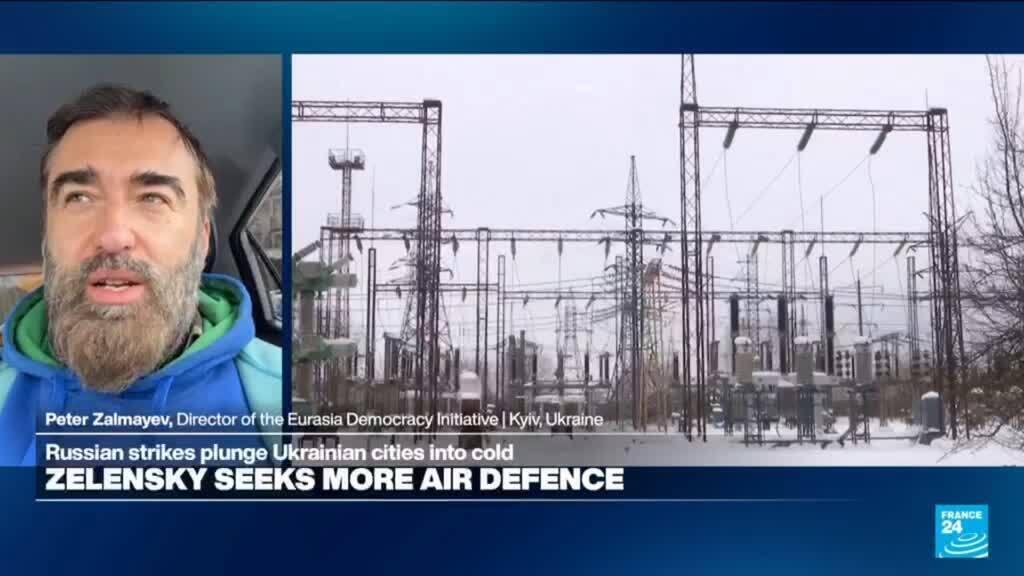
“An electrical ceasefire is needed”: warnings as Russia targets Ukraine’s power grid
Politics

“An electrical ceasefire is needed”: warnings as Russia targets Ukraine’s power grid

Russia’s strikes have hit Ukraine’s power infrastructure, leaving many communities without heat and electricity. For more, France 24’s Catherine Viette is joined by Peter Zalmayev from the Eurasia Democracy Initiative.

2h
3 min
0
Read Article
A look back at 19 of the biggest winter storms to hit the US in the last century
Science

A look back at 19 of the biggest winter storms to hit the US in the last century

Over 30 US states are preparing for Winter Storm Fern. New York Daily News Archive/NY Daily News via Getty Images Historic blizzards have caused fatalities, major damage, and lasting infrastructure changes. The Great Appalachian Storm of 1950 killed 383 people and dropped 62 inches of snow in some areas. A staggering 189 inches of snow fell on Mount Shasta, California, in 1959. The US is experiencing a potentially historic winter storm. As Winter Storm Fern sweeps across the country this weekend and into the start of the week, more than half of the US states are expected to be impacted by severe wintry weather, including ice, heavy snow, and dangerously cold wind chills. The worst snowstorms in the US since the 1920s have killed hundreds of people, caused billions of dollars worth of damage, and, for many who lived through them, been impossible to forget. Many of them have been blizzards. Meteorologist David Stark told The New York Times that means winds are at least 35 mph and visibility is less than 1/4 mile. As we wait to see the impact of this weekend's monster snowstorm, here are some of the worst snowstorms in recent US history. The Knickerbocker Storm of 1922 Buyenlarge/Getty Images From January 27 to January 29, this blizzard, which traveled up from the southeast US and centered on Washington, DC, dropped 24 inches of snow. Residents had no warning of the storm. On January 26, the Washington Times had predicted fair weather with slowly rising temperatures, per the National Endowment for the Humanities. The snowstorm was named Knickerbocker after the Knickerbocker Theatre in Washington, which collapsed because of the snow's weight on the theater's roof. The collapse killed 98 people who were inside watching a silent film called "Get Rich Quick, Wallingford," and left another 133 injured. Afterward, building codes were updated to require stronger roof support structures. The Armistice Day Blizzard of 1940 John Vachon/Getty Images On November 11, a fierce winter storm battered the Upper Midwest. Without much warning, temperatures suddenly dropped, snow began to fall, and the "winds of hell" — as reported by the Milwaukee Journal Sentinel — began to blow. As much as 26.6 inches of snowfall were recorded, the National Weather Service said. According to a hunter who was stranded during the storm, only the tops of telephone poles could be seen above the snow, the St. Cloud Times reported. It came suddenly, catching people unaware, killing 49 people in Minnesota, per the Minnesota Star Tribune, and 150 in total. It also killed 1.6 million turkeys. The storm had lasting repercussions. To help with accuracy, local weather forecasting moved out of cities like Chicago to be more local so they could provide better predictions. The Great Appalachian Storm of 1950 AP Photo Starting November 24, 22 states felt the wrath of this slow-moving blizzard that the Washington Post called a "meteorological powerhouse." It's also been called the Great Thanksgiving Storm. The snowstorm covered an area from West Virginia to Pennsylvania and buried parts of it under as much as 62 inches of snow, per the National Centers for Environmental Information. High winds with gusts of up to 160 mph knocked over trees and caused almost 1 million power outages. It killed at least 383 people, caused hundreds of millions of dollars' worth of damage (in today's money), and became a weather prediction case study. Two cyclone researchers said it was the "benchmark" storm against which all other major 20th-century storms could be compared. The six-day snowstorm on Mount Shasta in 1959 Buyenlarge/Getty Images Beginning on February 13, and going for six days, 189 inches (about 16 feet) of snow fell on Mount Shasta, California. It holds the world record for the most snow falling in a single snowstorm, according to the Chicago Tribune. Since it fell on an uninhabited mountain, no deaths occurred. The Chicago Blizzard of 1967 Robert Abbott Sengstacke/Getty Images On January 26 and 27, Chicago saw its highest snowfall on record, with 23 inches, along with 53 mph wind gusts. The storm caught the city off guard, as it had experienced warm temperatures only two days earlier. The sudden, heavy fall left 50,000 cars abandoned, shops looted, and 650 students sleeping at school because buses couldn't get through the snow. Twenty-six people died, the Chicago Tribune reported. The 100-hour snowstorm of 1969 Boston Globe/Boston Globe via Getty Images From February 24 to February 27, snow fell in the northeast for 100 hours — or four days — straight, as reported by WBUR. On the first day, 4 feet of snow fell on Mt. Washington, New Hampshire. Another 4 feet fell over the next few days. Boston was hit with 26.3 inches, and Portland, Maine, had 26.9. The National Oceanic and Atmospheric Administration rated this the worst snowstorm of the century based on factors including the amount of snow, the area affected, and the number of people affected. But the most important factor was its size — the storm was 4.5 times larger than the 1993 "storm of the century." However, it's a relatively unknown storm, since much of it was outside the northeast corridor. The Blizzard of 1977 1/29/1977-Lafayette, IN- As far as the eye can see, abandoned vehicles line snowbound I-65 near Lafayette in Central Indiana. Hundreds of truckers and motorists hav taken refuge in nearby towns waiting a break in the bitter sub-zero cold to resume their travels. Bettmann / Getty On January 28, a massive blizzard hit the US. Along with heavy snowfall, there were 70 mph winds. The Los Angeles Times reported that the storm was "a so-called perfect storm, a once-in-a-generation weather system combining an unlikely compilation of high winds, avalanches of snow and frigid temperatures." This storm was brutal in Buffalo, New York, because snow had fallen for 28 days before the storm, piling up on Lake Erie, perfectly placed to be blown about. The storm remained in the region for three days, per WGRZ. So many people abandoned their cars that one in five vehicles was illegally parked or abandoned across Buffalo. The storm killed 29 people, and six of them died in their cars, The New York Times reported. The Great Blizzard of 1978 Barbara Alper/Getty Images On January 26 and 27, Ohio and the Great Lakes faced one of the worst snowstorms of the century. According to the National Weather Service, "This once-in-a-lifetime storm will always be the standard by which the severities of all future winter storms to hit this region are judged." It was a "bomb cyclone," which means it developed very quickly. To get the name, atmospheric pressure has to fall by 24 millibars within 24 hours. During this storm, wind chills plunged to -50 degrees Fahrenheit. Even though only 7 inches of snow fell in Cincinnati, it was hit hard because there were already 14 inches on the ground, and 60 mph winds channeled it into snowdrifts that towered up to 25 feet high, The Cincinnati Enquirer reported. Across the region, motorways closed, and roofs and telephone lines collapsed. The snowstorm killed 70 people and caused about $2 billion worth of damage. The Megalopolitan Blizzard of 1983 Newsday LLC/Newsday RM via Getty Images From February 10 to 12, this snowstorm hit a wide area from Virginia to New England. In Washington, three airports, bus stations, and the subway system all had to close. It was particularly memorable since, along with a heavy blanketing of snow, there was thunder, too. The Washington Post reported that the "thundersnow along the Eastern Shore produced extremely strong winds and whiteout conditions." It caused 25-foot waves in the Atlantic Ocean and 55 mph winds that capsized a coal-carrying boat, killing 34 people. The Storm of the Century, 1993 David A. Rogers/Staff Photographer Beginning on March 12, the US had what is commonly referred to as the worst snowstorm of the 20th century. Snow covered areas from Florida to Maine, affecting more than 100 million people. Winds reached 100 mph. The New York Times described it as "a monster with the heart of a blizzard and the soul of a hurricane." Power cuts plunged 2.5 million homes into darkness and cold. The storm killed 300 people and caused at least $2 billion worth of damage. NOAA classed it as a Category 5 storm. It was the second-highest rated snowstorm (despite its name) after the 100-hour snowstorm in 1969. In Syracuse, New York, just under 43 inches of snow fell, while 20 inches fell through much of the northeast. It caused swells that a Coast Guard official told the Washington Post looked like "a big washing machine." The Blizzard of 1996 Barbara Alper/Getty Images From January 6 to 10, this vicious storm forced then-President Bill Clinton to shut down the government and declare nine states and DC as disaster areas. Heavy snowfall blanketed much of the Eastern Seaboard. In one day, Virginia had 20 inches of snow, while Newark had 28 inches fall over several days, and Philadelphia had 30 inches. The storm caught some people off guard, the Washington Post reported, since snow stopped long enough that some forecasters said it was over, only for 40 mph winds and more snow to return. Buildings, including barns and a church in Harlem, New York, collapsed. Four people died from heart attacks while clearing snow, according to The New York Times. In total, 154 people died. The Presidents Day Storm of 2003 New York Daily News Archive/NY Daily News via Getty Images For three days in February, including Presidents Day, a snowstorm caused delays and deaths across much of the Northeast. It began as a rainstorm, before the wet weather met arctic cold air and turned to snow … a lot of snow. In Maryland, a state highway supervisor told Fox News, "It's no man's land out there. It looks more like Siberia than Maryland." New York got 19.8 inches of snow, while a lucky ski resort in Pennsylvania got 40 inches of snow. In Boston, 27.5 inches of snow fell in 24 hours, which broke the city's record for snowfall in a single day, per the National Centers for Environmental Information. The storm caused 28 deaths, and at least 2,000 flights were canceled. The Blizzard of 2006 Ramin Talaie/Corbis via Getty Images On February 11 and 12, a massive snowstorm 1,200 miles long and 500 miles wide blanketed much of the country, from North Carolina to Maine, The New York Times reported. Winds reached 60 mph, up to 27 inches of snow fell, and more than 220,000 homes lost power. The storm brought thunder and lightning, too, which is known as "thundersnow." Hundreds of flights were canceled, and thousands were delayed. Snowmageddon, 2010 JEWEL SAMAD/AFP via Getty Images On February 5 and 6, Washington, DC, turned white as snow fell uninterrupted for 30 hours, the Washington Post reported. Just over 32 inches of wet, heavy snow were recorded. The snow's weight caused power outages for 200,000 properties, as well as the collapse of several churches and an airport hangar. Virginia, Maryland, Delaware, and Pennsylvania all declared a state of emergency. It was named "Snowmageddon" by a group called Capital Weather Gang, because Washington wasn't equipped to deal with so much snow. The name was solidified when former President Barack Obama repeated it. The Christmas Blizzard of 2010 Andrew Burton/Getty Images On December 26 and 27, a blizzard blanketed New York City in up to 29 inches of snow, the New York Daily News reported at the time. Winds reached 60 mph, causing whiteout conditions, while tens of thousands of people lost power. Then-New York City Mayor Michael Bloomberg told reporters, "It's hard to stand up in a 55-mile-an-hour wind, and particularly when the ground under your feet is slippery, so this really is dangerous." While it wasn't as savage as some of the other snowstorms on this list, it hit just after Christmas, causing travel chaos. The "Snovember" Storm of 2014 Gabe Souza/Staff Photographer Beginning on November 17 and lasting 5 days, a snowstorm battered Buffalo, New York, burying it under more than 7 feet of snow, the Weather Channel reported. Highways closed, 14 people died, and former President Barack Obama signed a disaster declaration to provide federal aid. This snowstorm was particularly cruel to Buffalo because of Lake Erie. At the time, the water was still reasonably mild. This warm water met incoming arctic air, the coldest it had been for that time of the year since 1986, and the mixture caused an extreme amount of snow to fall. It wasn't just Buffalo, though. Temperatures in every US state fell below freezing. Winter Storm Jonas, 2016 New Yorkers brave the Brooklyn Bridge. The first snow falls throughout the early morning as New York prepares for historic East Coast Blizzard. Louise Wateridge/Pacific Press/LightRocket / Getty This January winter storm, also known as Snowzilla, as reported by the Washington Post, affected over 102 million people and killed 52. A massive amount of snow fell: 24 million people were estimated to have come in contact with over 20 inches. Glengary, West Virginia, had the most snowfall, with 42 inches. In North Carolina, the storm's ice and wind knocked out the power at 150,000 homes. In Delaware, wind gusts were recorded at 75 mph. New Jersey faced intense flooding, with water surging higher than it did during Hurricane Sandy. According to the NOAA, it was one of the most powerful snowstorms in the northeast in 60 years. The Bomb Cyclone of 2018 A woman struggles with bags as she walks through the empty streets of Boston as the snow begins to fall from a massive winter storm on January 4, 2018 in Boston, Massachusetts. Spencer Platt/Getty This was a rapidly developing storm in January that covered more than 2,500 miles across the US, affecting 60 million people, the BBC reported. Along with heavy snowfall and 50 mph winds, the coast was rocked by swells, made even worse by unusually high tides. In Boston, a 3-foot storm surge smashed against the city. The storm caused more than 1 million children to miss school, and 4,000 flights to be canceled, per The New York Times. The Polar Vortex of 2019 Pedestrians walk through the falling snow in the Financial District, January 30, 2019 in New York City. Drew Angerer / Getty In late January, cold air from the Arctic descended onto North America, killing 21 people. Almost 2,000 flights were canceled, hundreds of schools were closed, and hundreds of cases of frostbite and hypothermia were reported, per The Guardian. Across the Midwest, more than 30 cold temperature records were broken. Illinois got hit particularly hard, with the city of Rockford recording -31 degrees Fahrenheit. Wind chills in Minneapolis-St. Paul plunged to -65 degrees Fahrenheit. Read the original article on Business Insider

2h
3 min
0
Read Article
France Proposes Social Media Ban for Under-15s
Politics

France Proposes Social Media Ban for Under-15s

President Macron has called for a ban on social media for under-15s to be in place by September, following alarming data from France's health watchdog on smartphone usage among teenagers.

2h
5 min
1
Read Article
Cop whose promotion is being blocked by Ben Gvir accuses him of threatening officers
Politics

Cop whose promotion is being blocked by Ben Gvir accuses him of threatening officers

Supt. Rinat Saban, whose advancement was stymied by police minister after testifying in PM's trial, speaks out for first time in court; Ben Gvir: AG's office acting like a 'mafia' The post Cop whose promotion is being blocked by Ben Gvir accuses him of threatening officers appeared first on The Times of Israel.

2h
3 min
0
Read Article
IDF Launches Wave of Strikes Across Lebanon
World_news

IDF Launches Wave of Strikes Across Lebanon

A coordinated military operation targeted Hezbollah positions in southern Lebanon and the Bekaa Valley, striking an arms manufacturing site and infrastructure. Lebanese authorities confirm at least one death.

2h
5 min
1
Read Article
Moscow Housing Market: Revenue Shifts in 2025
Economics

Moscow Housing Market: Revenue Shifts in 2025

While the Moscow housing market grew overall in 2025, major developers experienced revenue declines. Discover the factors behind this divergence and what it means for the industry.

2h
5 min
1
Read Article
2025 Housing Revenue: Major Developers Report
Economics

2025 Housing Revenue: Major Developers Report

A comprehensive look at the financial performance of major residential developers in 2025, based on market data from bnMAP.pro. The report details revenue figures, market concentration, and the financial health of the construction sector.

2h
5 min
1
Read Article
China's Army Investigates Top General Zhang Youxia
Politics

China's Army Investigates Top General Zhang Youxia

China's military has announced an investigation into General Zhang Youxia, a senior figure in the People's Liberation Army, for actions that allegedly undermined the party's absolute leadership over the armed forces.

3h
5 min
1
Read Article
🎉

You're all caught up!

Check back later for more stories

Back to Home