M
MercyNews
Home
Back
Can Science Explain Consciousness?
Science

Can Science Explain Consciousness?

Scientific American6h ago
3 min read
📋

Key Facts

  • ✓ The study of consciousness represents one of the most complex and debated topics in modern science, bridging multiple disciplines.
  • ✓ Researchers are investigating the fundamental question of whether subjective experience can be fully explained by physical processes in the brain.
  • ✓ Advances in neuroimaging and computational models are providing new tools to probe the biological basis of awareness.
  • ✓ The scientific community remains divided on the best theoretical frameworks for explaining how neural activity generates conscious perception.

In This Article

  1. The Final Frontier of the Mind
  2. Mapping the Neural Landscape
  3. The Hard Problem Remains
  4. Implications for Medicine and AI
  5. A Collaborative Global Effort
  6. The Journey Ahead

The Final Frontier of the Mind#

For centuries, philosophers and thinkers have grappled with the nature of human awareness. Today, a new wave of scientific inquiry is tackling this profound mystery with unprecedented rigor. The quest to understand consciousness—the very essence of subjective experience—has moved from the realm of speculation into the laboratory.

Researchers across neuroscience, psychology, and philosophy are converging on a central question: Can the spark of awareness be fully explained by the physical workings of the brain? This exploration is not merely an academic exercise; it holds the key to understanding what makes us human and could redefine the boundaries of medicine and artificial intelligence.

Mapping the Neural Landscape#

Modern science is armed with powerful tools to probe the brain's inner workings. Technologies like functional magnetic resonance imaging (fMRI) and electroencephalography (EEG) allow researchers to observe the brain in action, correlating specific patterns of neural activity with reported states of awareness. These methods provide a window into the biological machinery that underpins our perceptions, thoughts, and emotions.

However, observing correlation is not the same as explaining causation. The challenge lies in bridging the gap between objective brain data and the subjective quality of experience. Scientists are developing sophisticated computational models to simulate how vast networks of neurons might generate coherent consciousness, moving closer to a testable theory of mind.

  • Advanced neuroimaging to track brain activity in real-time
  • Computational models simulating neural networks
  • Analysis of brain states during sleep and anesthesia
  • Studies of patients with altered states of consciousness

The Hard Problem Remains#

Despite technological progress, a significant philosophical and scientific divide persists. The so-called "hard problem" of consciousness, a term coined by philosopher David Chalmers, questions why and how physical processes in the brain give rise to subjective experience. Why does the firing of certain neurons feel like the redness of a rose or the sound of a violin?

Some theories, like Integrated Information Theory, propose that consciousness is a fundamental property of certain complex systems, measurable by a quantity called 'phi'. Others argue for a more biological approach, suggesting consciousness emerges from specific neural architectures. This ongoing debate highlights that while we can map the brain, the leap to explaining the mind remains a formidable challenge.

The central mystery is not just how the brain processes information, but why that processing is accompanied by an inner, subjective life.

Implications for Medicine and AI#

The pursuit of understanding consciousness has profound practical implications. In medicine, a clearer definition could revolutionize the diagnosis and treatment of disorders of consciousness, such as coma, vegetative states, and severe dementia. It could also provide objective biomarkers for mental health conditions that are currently diagnosed based on subjective reports.

In the field of artificial intelligence, the question of consciousness is becoming increasingly relevant. As AI systems grow more complex, determining whether they could ever achieve genuine awareness is a critical ethical and technical consideration. Insights from neuroscience could guide the development of more sophisticated AI, while also raising important questions about machine rights and the nature of intelligence itself.

  • Improved diagnostics for neurological and psychiatric disorders
  • Development of targeted therapies for brain injuries
  • Guidelines for ethical AI development
  • New insights into the nature of self and identity

A Collaborative Global Effort#

The study of consciousness is no longer confined to isolated labs; it has become a global, interdisciplinary endeavor. Neuroscientists, philosophers, computer scientists, and clinicians are sharing data and theories at an accelerating pace. This collaborative spirit is essential for tackling a problem that transcends any single field of study.

International research initiatives are fostering new dialogues and standardizing methodologies to ensure that findings are robust and comparable across studies. By pooling resources and intellectual capital, the scientific community is building a more comprehensive framework for investigating the most intimate yet elusive aspect of our existence.

The Journey Ahead#

The scientific journey to explain consciousness is still in its early stages, but the path forward is clearer than ever. While definitive answers may be years away, each discovery brings us closer to demystifying the phenomenon that defines our reality. The integration of empirical data with philosophical inquiry is creating a richer, more nuanced understanding of the mind.

Ultimately, the quest to understand consciousness is a quest to understand ourselves. As research advances, it promises not only to unlock the secrets of the brain but also to reshape our concepts of life, intelligence, and what it means to be aware in a vast and complex universe.

Continue scrolling for more

AI Transforms Mathematical Research and Proofs
Technology

AI Transforms Mathematical Research and Proofs

Artificial intelligence is shifting from a promise to a reality in mathematics. Machine learning models are now generating original theorems, forcing a reevaluation of research and teaching methods.

Just now
4 min
324
Read Article
Le Pen admits "negligence" in EU fund embezzlement appeal trial
Politics

Le Pen admits "negligence" in EU fund embezzlement appeal trial

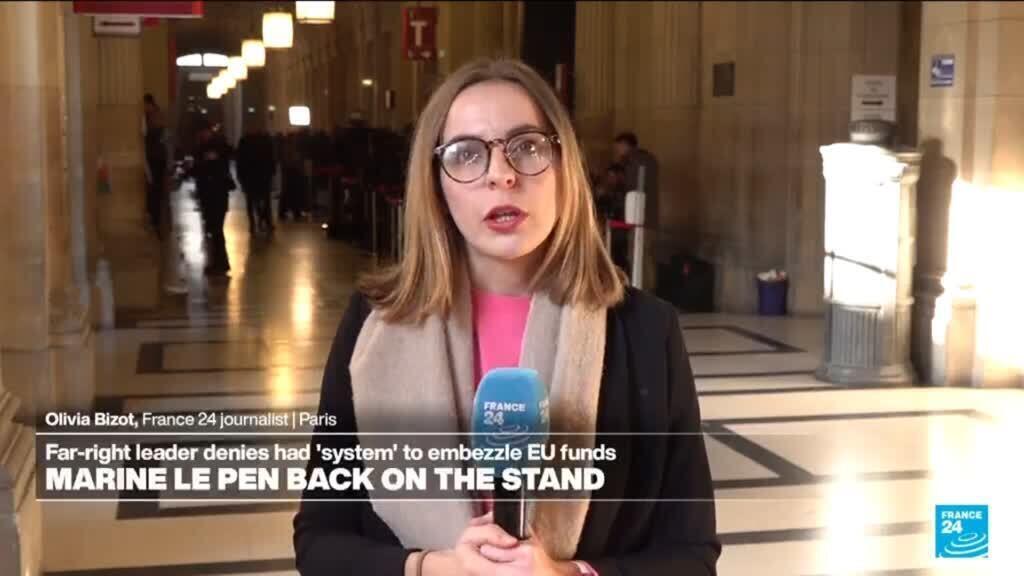
French far-right leader Marine Le Pen was questioned for the second day as part of her appeal trial regarding accusations of embezzlement of EU funds by her party for several years. The morning started with Le Pen admitting "negligence", while the lawyer for the European Parliament in the afternoon went on the attack, accusing her of using "simple denials" which do not explain how millions of euros in missing public funds. FRANCE 24's Olivia Bizot tells us more.

1h
3 min
0
Read Article
Trump says he won't use force in Greenland "but unclear what deal would pass"
Politics

Trump says he won't use force in Greenland "but unclear what deal would pass"

US President Donald Trump insisted he wants to “get Greenland, including right, title and ownership,” but said he wouldn’t employ force to achieve that, only a few days after threatening several European countries with tariffs if they do not agree to a US takeover of the Danish territory. FRANCE 24's Douglas Herbert looks into the issue for us.

1h
3 min
0
Read Article
Trump insiste na posse da Groenlândia e renova ameaças a países que não concordarem
Politics

Trump insiste na posse da Groenlândia e renova ameaças a países que não concordarem

Em Davos, Trump diz que 'ninguém pode defender Groenlândia como os EUA' O presidente dos Estados Unidos, Donald Trump, chegou a Davos disposto a não recuar sobre a aquisição da Groenlândia, contrariando o termo TACO, que o costuma defini-lo e na tradução livre significa “Trump sempre amarela”. ✅ Siga o canal de notícias internacionais do g1 no WhatsApp Se procurou tranquilizar a seleta audiência em Davos, que incluía chefes de Estado e governo, descartando o uso da força para conquistar o território semiautônomo da Dinamarca, Trump assegurou que começará as negociações, mas só a propriedade da ilha lhe interessa. “Tudo o que queremos é um grande pedaço de gelo, frio e mal localizado, que possa desempenhar um papel vital na paz mundial e na proteção do mundo”, acrescentou ele, que em alguns momentos referiu-se à Groenlândia como Islândia. A assertividade do presidente dos EUA na insistência de que “só os EUA podem proteger a Groenlândia” é a de quem vive em um mundo paralelo e desordenado, minando o papel da Otan e o de seus parceiros europeus. Discurso de Trump em Davos Evan Vucci/AP Entre poucos elogios, Trump exibiu o desprezo pela Europa, ao decretar que o continente está na direção errada e atribuindo a gestão fracassada aos “gastos governamentais, à imigração em massa descontrolada e às importações estrangeiras intermináveis”. O presidente alternava as críticas a seus homólogos europeus a elogios a si próprio: “Eles precisam sair da cultura que criaram nos últimos dez anos. É horrível o que estão fazendo a eles mesmos. Estão se destruindo. Queremos aliados fortes, não aliados seriamente enfraquecidos.” Para isso, Trump deixou claro que não precisa, nem deseja, usar a força para tomar a Groenlândia, mas que só aceitará a sua propriedade, e não um contrato de arrendamento. O presidente abusou de estocadas e ameaças aos líderes do continente: os EUA ficarão gratos a quem concordar com seu plano de anexação da ilha do Ártico. “Podem também dizer não, mas nós nos lembraremos.” Em outras palavras, quem não obedecer, enfrentará tarifas exorbitantes. Assim como usou o combate ao tráfico de drogas como pretexto para iniciar a ofensiva contra a Venezuela, e depois capturar Nicolás Maduro e controlar a distribuição de petróleo no país, Trump ressaltou que não está interessado nos minerais raros da Groenlândia, mas apenas na sua proteção. Suas palavras pareceram não convencer os interlocutores europeus, antigos aliados dos EUA, a quem ele agora trata como inimigos.

1h
3 min
0
Read Article
Jason Statham's 'Shelter' Launches Fortnite Experience
Entertainment

Jason Statham's 'Shelter' Launches Fortnite Experience

Jason Statham's upcoming action-thriller 'Shelter' has launched a game experience in Fortnite ahead of the film's January 30 theatrical release. The game is a 1–4 player co-op roguelike experience.

1h
5 min
5
Read Article
Ryan Murphy's 'The Beauty' Explores Aesthetic Costs
Entertainment

Ryan Murphy's 'The Beauty' Explores Aesthetic Costs

Ryan Murphy's latest FX series, 'The Beauty,' adapts the comic by Jeremy Haun and Jason A. Hurley to explore the real price of aesthetics and the saying that beauty is pain.

1h
5 min
6
Read Article
Marseille Drug Lord Killed in Christmas Ambush
Crime

Marseille Drug Lord Killed in Christmas Ambush

A high-ranking DZ Mafia leader was assassinated in Marseille on Christmas Day. Three suspects, including a teenager, now face murder charges in a case that has shocked the French underworld.

1h
5 min
6
Read Article
Finland's Frontline Readiness: A NATO Ally's Confidence
Politics

Finland's Frontline Readiness: A NATO Ally's Confidence

Speaking at the World Economic Forum, President Alexander Stubb detailed the unique capabilities that give Finland confidence in its ability to defend against a Russian attack, from massive artillery reserves to extensive civilian bunkers.

1h
5 min
3
Read Article
Why I Regret Banning Kids From My Wedding
Lifestyle

Why I Regret Banning Kids From My Wedding

Eighteen years after her mostly child-free wedding, a mother reflects on why she wishes she had invited all her friends' children and how the experience changed her perspective on family celebrations.

1h
7 min
6
Read Article
Uncertainty: The New Wild Card on Travelers' Itineraries
Lifestyle

Uncertainty: The New Wild Card on Travelers' Itineraries

Global travel is undergoing a fundamental shift as geopolitical tensions, military conflicts, and climate change transform once-reliable destinations into unpredictable risks, forcing travelers to adapt their planning strategies.

1h
7 min
6
Read Article
🎉

You're all caught up!

Check back later for more stories

Back to Home