M
MercyNews
Home
Back
Australian Writers' Festival Canceled Amid Controversy
Culture

Australian Writers' Festival Canceled Amid Controversy

Times of Israel1d ago
3 min read
📋

Key Facts

  • ✓ The literary event was canceled entirely following the decision to disinvite Palestinian author Randa Abdel-Fattah.
  • ✓ The festival's director stepped down from their position in protest of the author's removal from the program.
  • ✓ Randa Abdel-Fattah publicly stated that she does not consider Hamas to be a terror group.
  • ✓ The author also expressed hostile sentiments toward Zionists in her public commentary.
  • ✓ The cancellation highlights deep divisions within the cultural sector regarding political expression and literary events.

In This Article

  1. Festival Collapses
  2. The Disinvitation
  3. Director's Resignation
  4. Abdel-Fattah's Stance
  5. Event Fallout
  6. Key Takeaways

Festival Collapses#

A major Australian literary event has been abruptly canceled following a contentious decision to remove a Palestinian author from its program. The festival's collapse underscores the growing tensions between cultural programming and political discourse in the literary world.

The controversy erupted when organizers disinvited Randa Abdel-Fattah, a prominent Palestinian-Australian writer. The situation escalated rapidly when the festival's director resigned in protest, ultimately leading to the complete cancellation of the event.

The Disinvitation#

The festival's decision to remove Randa Abdel-Fattah from the lineup came after scrutiny of her public statements regarding the conflict in the Middle East. Organizers faced mounting pressure over her political positions, which they deemed incompatible with the event's values.

Abdel-Fattah's removal was driven by two specific statements that drew intense criticism:

  • Her declaration that Hamas is not a terrorist organization
  • A post wishing 'hell to every last Zionist'

These comments, made in the context of the October 7 attacks, created a firestorm that organizers ultimately decided was too volatile for the festival to manage.

"hell to every last Zionist"

— Randa Abdel-Fattah, Palestinian-Australian Author

Director's Resignation#

The festival's director chose to resign rather than support the decision to disinvite the author. This principled stand left the event without leadership and signaled a deep internal rift over how to handle politically charged content.

The resignation highlighted a fundamental disagreement within the festival's leadership about the boundaries of free expression versus community safety. By stepping down, the director transformed what might have been a quiet removal into a public crisis of conscience for the literary community.

The decision to resign demonstrates the high stakes involved when cultural institutions navigate complex political landscapes.

Abdel-Fattah's Stance#

Randa Abdel-Fattah has been unapologetic about her political positions, particularly regarding the conflict that began on October 7. Her refusal to classify Hamas as a terrorist organization places her at odds with many mainstream political and cultural institutions.

The author's rhetoric extends beyond policy disagreements to personal invective. Her public wish for 'hell to every last Zionist' represents a particularly inflammatory position that made her presence at a mainstream literary event untenable for organizers.

These statements reflect a broader pattern of political engagement that has made Abdel-Fattah a polarizing figure in Australian cultural circles.

Event Fallout#

The cancellation represents a significant disruption for the Australian literary community, which had anticipated a vibrant festival season. The loss of the event affects not just the organizers and scheduled participants, but also the broader audience seeking diverse literary voices.

The incident raises questions about the role of political litmus tests in cultural programming. It demonstrates how quickly a single controversy can derail months of planning and destroy an event's viability.

For the publishing industry, this serves as a cautionary tale about the risks of platforming authors with controversial political views, particularly during times of heightened geopolitical tension.

Key Takeaways#

The cancellation of this Australian writers' festival illustrates the fragile balance cultural institutions must maintain between free expression and community standards. When that balance fails, entire events can collapse.

Three critical factors contributed to this outcome: the author's controversial statements about Hamas, her inflammatory rhetoric toward Zionists, and the director's subsequent resignation. Together, these elements created an insurmountable crisis.

Looking forward, cultural organizers face the challenge of navigating increasingly polarized political environments while maintaining inclusive literary spaces. This incident will likely influence how similar events approach author selection and political controversy in the future.
#Israel & the Region#Australia#antisemitism in Australia#Bondi Beach terror attack#Randa Abdel-Fattah#Palestinians#October 7 Hamas atrocities

Continue scrolling for more

How Putin’s focus on Ukraine war leaves allies like Venezuela, Iran and Cuba exposed
Politics

How Putin’s focus on Ukraine war leaves allies like Venezuela, Iran and Cuba exposed

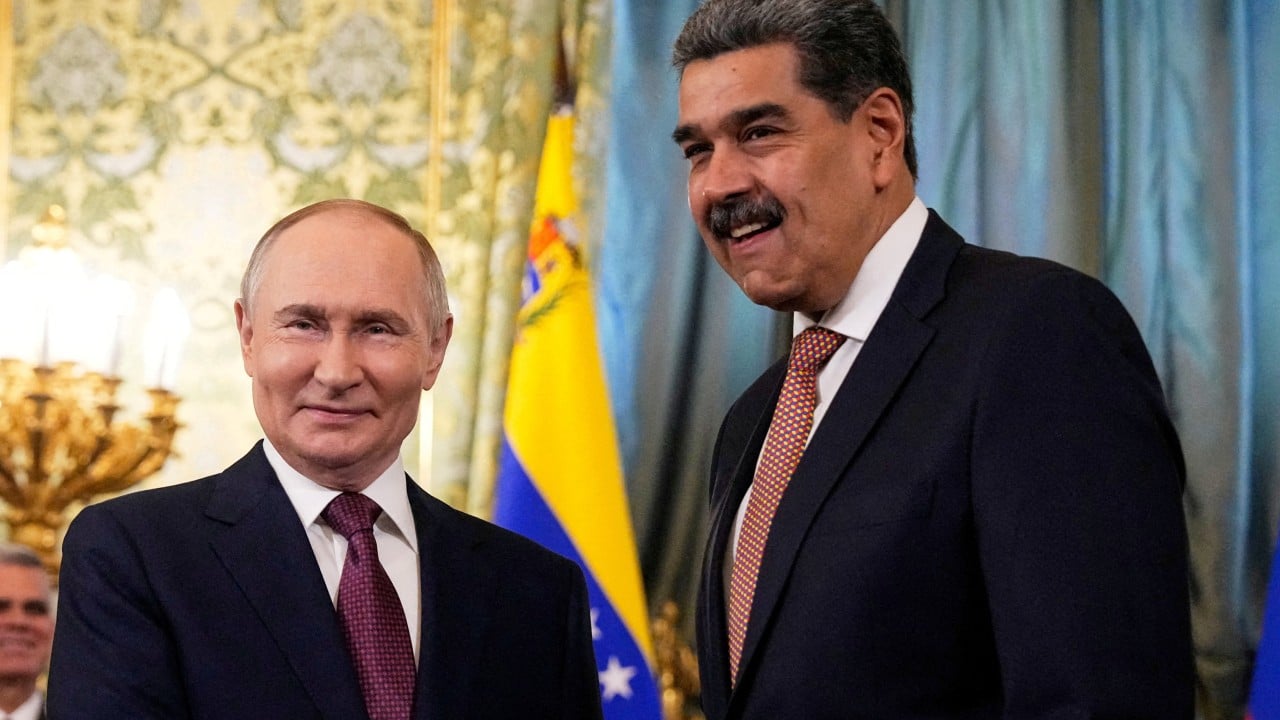
As Russian President Vladimir Putin focuses his attentions on Moscow’s war in Ukraine, his strategic allies around the world have been left feeling neglected – or worse. In Venezuela, officials now think their years-long security relationship with Moscow was a paper tiger. They’re not alone: From Damascus and Tehran to Havana, over the last 13 months authoritarian regimes which previously benefited from their close ties to the Kremlin have found Russian support lacking when it mattered...

44m
3 min
0
Read Article
Politics

Канада предложит себя Китаю // Канадский премьер начинает визит в КНР

Премьер-министр Канады Марк Карни начинает свой первый визит в Китай. Предстоящие 15 и 16 января встречи главы канадского правительства с китайским руководством вполне могут ознаменовать новый сдвиг в отношениях двух стран, несколько лет назад находившихся на грани острой конфронтации. По расчетам Оттавы, Пекин может предоставить стране новые экономические возможности на фоне стремительного ухудшения отношений Канады с США, особенно в торговой сфере. Однако в Китае Марку Карни предстоит пройти по тонкому льду — не сильно прогнуться под Китай в политическом плане ради экономических бонусов и при этом не спровоцировать на еще больший антагонизм Штаты, которые будут ревностно следить за ходом визита канадского премьера.

48m
3 min
0
Read Article
China's much-hyped radars appear to have been of little help when the US launched its massive air assault against Venezuela
World_news

China's much-hyped radars appear to have been of little help when the US launched its massive air assault against Venezuela

China's JY-27A radar didn't appear to be effective during the US raid on Venezuela. US Air Force Photo Venezuela's Chinese air defense radars weren't game-changing during the US raid to capture Maduro. China has touted the effectiveness in combat of radars like its JY-27A. The lack of effect recently raises questions about both the radar and their operators. Venezuela's military had Chinese-made anti-aircraft radars available when the US launched a surprise air assault against the country to capture the country's now-former leader, Nicolás Maduro, earlier this month. They appear to have been of little help. Operation Absolute Resolve involved over 150 US military aircraft, none of which were shot down. A helicopter was hit, reportedly by machine gun fire, but remained operational. Venezuela has a number of China's JY-27A mobile radars, which Beijing has touted as top-of-the-line systems. It has said the radar can detect stealth assets, like the American F-22 and F-35, from over 150 miles away. The success of the surprise raid by US special operators into downtown Caracas, part of a larger mission which involved not only stealth airpower but also older fourth-generation aircraft and helicopters, suggests that something didn't go as planned on defense. That may be on the operators rather than the tech though. After the raid, a Japanese reporter asked a Chinese foreign ministry spokesperson what Beijing thought about the "large amount of military equipment" China sold Venezuela apparently being "of little practical use." The Chinese spokesperson responded by condemning the US strike. A destroyed air defense unit at a Venezuelan military base. Leonardo Fernandez Viloria/REUTERS The Chinese-made JY-27A is a long-range radar used for detecting and tracking hostile aircraft in protected airpsace. Introduced in 2014, the radar system consists of a radar mast with multiple antenna panels supported by separate radar and control vehicles. Chinese sources claim it has features designed to reduce jamming. A newer version, the JY-27V, has since been developed. When Venezuela purchased JY-27As from China last year, there were claims that the radars were able to lock onto multiple F-35B fighter jets off the Venezuelan coast, presenting a potential challenge to the one-way transparency advantage of the US military. "That's all well and good," Michael Sobolik, a senior fellow at the Hudson Institute, told Business Insider, "but when it really matters is in a moment of conflict." Perhaps they were unable to withstand sophisticated electromagnetic spectrum attacks, or maybe they were improperly utilized by their operators. Either way, if they weren't effective, they were of little use for air defense. Radar systems are what inform air defense crews on what they'll need to target and what weapons they need to use. "If you don't have functioning radars then you're a sitting duck," he said. US military leaders said that American aircraft were able to overwhelm Venezuelan air defenses, which has been assessed to include a range of Russian-made systems like S-300VM batteries, Buk-M2 systems, and older S-125 Pechora-2M launchers, as well as the Chinese radars. Some of these pieces are capable but aren't the newest variants used by their respective exporters. In the aftermath, Secretary of Defense Pete Hegseth mocked the effectiveness of the Russian air defenses. Nothing was said about the Chinese radars in that speech. Key to air defense is how the network works together, and the effectiveness of the operator is vital. In Venezuela's case, it may have been lacking the necessary conditions for successful air defense operations. Seven US troops were hurt during the raid in Venezuela over the weekend, a defense official said. US Air Force photo by Airman 1st Class Isabel Tanner A study from the Miami Strategic Intelligence Institute think tank, which hosts experts on Latin America, assessed Venezuela's air defenses as being in critical condition as of last year. It said that over 60% of its radar fleet was non-operational, combat aviation doesn't fly often, and the country has received little maintenance support and spare parts from its exporters. Venezuela purchased Chinese-made radars and Russian-made surface-to-air missile batteries to modernize its air defenses, but the hardware alone can't make up for internal shortcomings. Analysis by The New York Times found that some of Venezuela's air defense equipment was in storage or not operational, leaving it unprepared for the US attack. Reports also indicated Venezuela's military lacked the spare parts and technical background to keep air defense systems running. Even if the failures are on the part of the Venezuelan military, the ineffective performance of the Russian and Chinese systems sends a "pretty big message," Sobolik said. It elevates confidence in US capabilities while raising questions about those of rivals. US officials said no American aircraft or military personnel were lost during the raid on Venezuela. Of the 150 aircraft and almost 200 American troops involved in the mission, one helicopter took fire and seven troops were injured. Read the original article on Business Insider

50m
3 min
0
Read Article
One thing that might get workers to embrace AI? The 4-day workweek.
Technology

One thing that might get workers to embrace AI? The 4-day workweek.

Working fewer days might help create buy-in among workers for adopting AI, authors of a book on the four-day workweek suggest. Drew Angerer/Getty Images Adopting a four-day workweek could boost employees' support for using AI on the job. CEOs report that some workers are resisting the technology, despite firms making big investments. Authors of a book on a four-day workweek say that the setup could let workers share in AI's gains. Bosses, if you're struggling to get your people excited about AI, here's one idea: Embrace the four-day workweek. Sharing some of AI's promised efficiency gains with employees — by letting them work fewer hours, not just get more done — could help get workers on board with a technology that some fear might ultimately replace them, authors of a new book advocating for a shorter workweek told Business Insider. Letting workers put in four days' work for five days' pay would be one way to "share the rewards" of innovation and technological advancement, said Jared Lindzon, a coauthor of the book "Do More in Four." When it comes to AI, giving workers more time away from their jobs could make it more likely they'd get behind the technology "because they're getting part of that benefit," rather than standing in the way of it, he said. Joe O'Connor, Lindzon's coauthor, said that when it comes to discussions about AI in the workplace, the conversation among workers often turns to fears of job cuts. 'Cultural resistance and emotional friction' Anxiety about AI-induced layoffs might be one reason rolling out the technology has proven difficult for some companies. In an early 2025 survey of business leaders in eight countries from the IT company Kyndryl, 45% of CEOs said their workers were resisting the technology. "Cultural resistance and emotional friction" are the biggest impediments to AI adoption, Boston Consulting Group reported in 2025. That's unwelcome news for C-suite decision-makers eager to ratchet up efficiency. One in three companies is pumping at least $25 million into AI, according to BCG. Business leaders have, at times, publicly expressed their frustration over some workers' foot-dragging. Coinbase CEO Brian Armstrong said in 2025 that he'd gone "rogue" in firing some workers at the crypto exchange who didn't adopt AI after being told to do so. The head of the software company IgniteTech has, meanwhile, lamented that "changing minds was harder than adding skills." In recent years, the firm cut nearly eight in 10 workers after they failed to quickly embrace AI. Nurturing the productivity gains that many leaders seek will often require people to perform different kinds of work — especially as AI takes over some tasks, O'Connor said. He expects that demand for creativity, judgment, critical thinking, and adaptability will increase and that those "fundamentally human" traits won't be fostered by simply moving faster or working longer, he said. "It's going to be more about maximizing people's energy, maximizing people's motivation, maximizing people's well-being and recovery," O'Connor said. A four-day workweek could promote those things, he said. Some leaders expect workweeks will shrink The idea that AI could allow people to work less isn't new. For years, the technology's advocates have said it could free up humans to do more of what they love, while handing off the grunt work to bots. The CEO of startup Mechanize, for example, says the company's aim is to automate every job. That notion has led some of the biggest corporate luminaries to predict that working hours could plummet as AI adoption increases. Microsoft cofounder Bill Gates has said that time on the clock might shrink to two days, while JPMorgan's Jamie Dimon has said workweeks of 3.5 days could become a thing. Even Nvidia's Jensen Huang — known for regularly putting in 14-hour days at the chipmaker and working on holidays — has said he could see the tech allowing for more time away from the office. Politicians have weighed in, too. Vermont Senator Bernie Sanders, citing efficiency gains from technology such as AI, introduced legislation in 2024 to trim the standard workweek to 32 hours. There hasn't yet been widespread adoption of the four-day workweek, likely in part because employers wield more power in many parts of the job market. O'Connor said that while adoption of four-day setups was lower in 2025 than in 2023, when far more workers were job-hopping, more employers are opting for shorter weeks than before the pandemic upended norms about work. Not all CEOs will be ready to give up the gains Umesh Ramakrishnan, cofounder of the executive search and leadership advisory firm Kingsley Gate, told Business Insider that many leaders, himself included, would want to harness AI's productivity gains to boost a business's top and bottom lines. "If you have a day to spare, get me more revenue, get me more profit," he said, adding that while it might sound "heartless," that's simply how business works. Yet, Lindzon said, asking workers to be 20% more effective — the equivalent of a single day in a standard workweek — so that they might benefit from that boost is likely to be more effective than asking them to do it for the good of the company. "It completely changes the conversation from a 'You have to do this' to 'We get to do this together,'" he said. Do you have a story to share about your career? Contact this reporter at tparadis@businessinsider.com. Read the original article on Business Insider

53m
3 min
0
Read Article
Nantes : décrivant «une ville à la dérive», François de Rugy soutiendra la liste de la droite et du centre aux municipales
Politics

Nantes : décrivant «une ville à la dérive», François de Rugy soutiendra la liste de la droite et du centre aux municipales

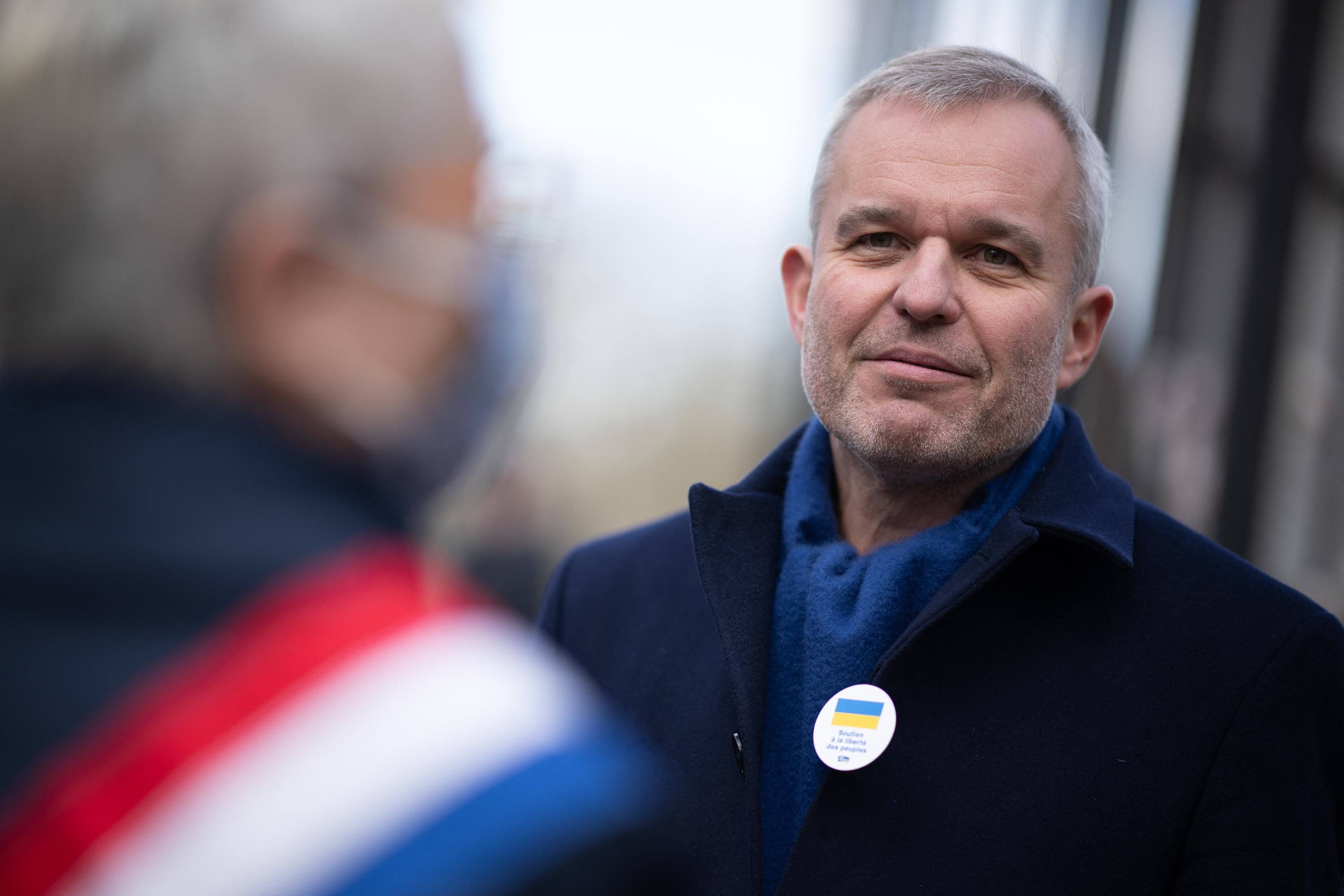
INFO LE FIGARO - Venant de la gauche écologiste, l’ex-président de l’Assemblée nationale (désormais Renaissance) officialise auprès du Figaro son soutien au candidat Foulques Chombart de Lauwe.

55m
3 min
0
Read Article
Japan's Takaichi Calls Snap Election
Politics

Japan's Takaichi Calls Snap Election

Prime Minister Takaichi has announced plans for a snap election in Japan, a strategic move designed to strengthen the ruling party's position and solidify the new leader's mandate.

57m
3 min
0
Read Article
Dilbert Creator Scott Adams Dies at 68
Entertainment

Dilbert Creator Scott Adams Dies at 68

The American cartoonist behind the iconic office satire Dilbert has passed away at the age of 68. Adams, who battled prostate cancer, leaves behind a complicated legacy defined by his sharp wit and a 2023 controversy.

1h
5 min
6
Read Article
Trump's High-Stakes Gambit in Venezuela and Iran
Politics

Trump's High-Stakes Gambit in Venezuela and Iran

An emboldened President Trump is making bold strategic moves across multiple geopolitical fronts, from Venezuela to Iran, signaling a new era of assertive American foreign policy with significant risks and potential rewards.

1h
5 min
2
Read Article
German Reservist Chief Proposes Greenland Deployment
Politics

German Reservist Chief Proposes Greenland Deployment

A proposal to send European troops to Greenland has ignited geopolitical debate. The head of Germany's armed forces reservists outlines a strategy to counter US influence in the resource-rich Arctic territory.

1h
5 min
8
Read Article
Iran's Instability Threatens Moscow's Strategic Alliance
Politics

Iran's Instability Threatens Moscow's Strategic Alliance

The potential collapse of Iran's government presents a significant geopolitical challenge for Moscow, which has watched its regional alliances fray in recent years. This development could reshape power dynamics across the Middle East.

1h
5 min
0
Read Article
🎉

You're all caught up!

Check back later for more stories

Back to Home