M
MercyNews
Home
Back
Algeria Declares French Colonisation a 'State Crime'
Politics

Algeria Declares French Colonisation a 'State Crime'

EuronewsDec 25
3 min read
📋

Key Facts

  • ✓ Algeria has passed a law declaring French colonisation a 'state crime'.
  • ✓ French authorities have described the law as a 'manifestly hostile initiative'.
  • ✓ The law represents a continuation of deteriorating relations between Paris and Algiers.

In This Article

  1. Quick Summary
  2. The New Legislation
  3. France's Diplomatic Response
  4. A History of Strained Relations
  5. Future Implications

Quick Summary#

Algeria has passed a new law declaring the period of French colonisation a 'state crime'. This legislative action formalizes Algiers' position on the historical period and has immediate diplomatic consequences. The law directly targets the official actions of the French state during the colonial era.

The move has been met with swift condemnation from French authorities. Paris has labeled the law a 'manifestly hostile initiative'. This reaction underscores the deep and ongoing divisions between the two nations regarding their shared history. The legislation is not merely symbolic; it represents a hardening of Algiers' official stance and is a direct challenge to the narrative often presented by France.

This event is the latest in a series of diplomatic tensions. Relations have been deteriorating for some time, and this law is seen as a major escalation. It solidifies a historical grievance into formal law, making future reconciliation efforts more complex. The situation highlights the long shadow cast by colonial history on modern international relations.

The New Legislation#

The Algerian parliament has passed a law that officially defines the French colonisation of Algeria as a 'state crime'. This is a significant legal and political step for the North African nation. By codifying this description, Algeria is formally cementing its historical narrative into law. The legislation addresses the period of French rule, which lasted for 132 years and ended with a brutal war for independence.

The term 'state crime' carries significant weight in international law and diplomacy. It implies that the actions taken by the French state during colonisation were not merely colonial policies but constituted criminal acts at a state level. This framing moves the issue from a matter of historical debate to one of legal and moral accountability. For many in Algeria, this law is a long-overdue recognition of the suffering endured during the colonial period.

While the full text of the law and its specific implications for France are still being analyzed, its symbolic power is immediate. It serves as a powerful statement to the international community and to the Algerian people. The law reinforces the official historical perspective taught in Algerian schools and commemorated in its public memory. It is a clear assertion of national identity and historical justice.

"a manifestly hostile initiative"

— French authorities

France's Diplomatic Response#

The reaction from France was swift and unequivocal. French authorities issued a sharp rebuke, describing the Algerian law as a 'manifestly hostile initiative'. This choice of words indicates a serious level of diplomatic concern and displeasure. The statement suggests that Paris views the law not as a domestic Algerian matter but as a direct and hostile act aimed at France.

This condemnation reflects the broader tensions that have been building between the two governments. The relationship between Paris and Algiers has been fraught with difficulties, often centered on unresolved issues from the past. The French position has typically been to acknowledge the 'painful' history of colonisation while stopping short of offering a full state apology or accepting legal culpability. This new law directly challenges that position.

The diplomatic fallout is likely to be significant. The 'manifestly hostile' label suggests that France may consider retaliatory measures, which could range from recalling an ambassador to suspending cooperation on key issues. The statement confirms that this law is not being treated lightly in Paris and will likely lead to a further cooling of relations between the two Mediterranean nations.

A History of Strained Relations#

The current dispute is not an isolated incident but rather the latest chapter in a long and complex history. Relations between Algeria and France have been deteriorating for years, often flaring up over historical memory. Key points of contention have included France's official acknowledgments of its past actions, the issue of colonial-era archives, and the status of Algerian immigrants in France.

Historical memory is a deeply sensitive topic in both countries. In France, the colonial period is often viewed through a lens of nostalgia by some, while others acknowledge the brutality of the regime. In Algeria, the memory of the war of independence, which resulted in hundreds of thousands of deaths, is a foundational element of the modern state. These divergent perspectives make reconciliation difficult.

The new law will likely exacerbate these existing fault lines. By legally defining the past, Algeria has made it harder for future French leaders to navigate the issue with ambiguity. The move effectively raises the stakes for any diplomatic engagement. It signals that Algiers is no longer willing to accept what it sees as an incomplete reckoning with the past from its former colonial ruler.

Future Implications#

The passage of this law sets a new precedent in the relationship between Algeria and France. It moves the historical dispute from the realm of political rhetoric into the domain of formal law. This could have lasting consequences for bilateral cooperation in areas such as trade, security, and migration. Any future agreements may now be viewed through the prism of this unresolved historical grievance.

For the region, this development highlights the ongoing struggle of post-colonial nations to assert their historical narratives. It serves as a reminder that the legacy of colonialism is not merely a matter of the past but continues to shape contemporary politics and international relations. The strong reaction from France shows that former colonial powers are still sensitive to how this history is officially characterized.

Ultimately, the path forward remains uncertain. The law has created a significant diplomatic obstacle. De-escalation will require careful and sensitive diplomacy from both sides. However, with Algeria having legally codified its position and France having labeled that act as 'hostile', finding common ground will be a formidable challenge for the foreseeable future.

Continue scrolling for more

Putin's Ukraine Focus Exposes Global Allies
Politics

Putin's Ukraine Focus Exposes Global Allies

A year into the Ukraine conflict, Moscow's authoritarian partners are discovering their security ties to Russia may be little more than a paper tiger, with support failing to materialize when most needed.

28m
5 min
6
Read Article
Canada's Premier Courts China Amid US Trade Tensions
Politics

Canada's Premier Courts China Amid US Trade Tensions

Prime Minister Mark Carney's inaugural visit to Beijing marks a potential turning point in Canada-China relations, as Ottawa seeks new economic partnerships while managing complex ties with Washington.

32m
5 min
6
Read Article
China's much-hyped radars appear to have been of little help when the US launched its massive air assault against Venezuela
World_news

China's much-hyped radars appear to have been of little help when the US launched its massive air assault against Venezuela

China's JY-27A radar didn't appear to be effective during the US raid on Venezuela. US Air Force Photo Venezuela's Chinese air defense radars weren't game-changing during the US raid to capture Maduro. China has touted the effectiveness in combat of radars like its JY-27A. The lack of effect recently raises questions about both the radar and their operators. Venezuela's military had Chinese-made anti-aircraft radars available when the US launched a surprise air assault against the country to capture the country's now-former leader, Nicolás Maduro, earlier this month. They appear to have been of little help. Operation Absolute Resolve involved over 150 US military aircraft, none of which were shot down. A helicopter was hit, reportedly by machine gun fire, but remained operational. Venezuela has a number of China's JY-27A mobile radars, which Beijing has touted as top-of-the-line systems. It has said the radar can detect stealth assets, like the American F-22 and F-35, from over 150 miles away. The success of the surprise raid by US special operators into downtown Caracas, part of a larger mission which involved not only stealth airpower but also older fourth-generation aircraft and helicopters, suggests that something didn't go as planned on defense. That may be on the operators rather than the tech though. After the raid, a Japanese reporter asked a Chinese foreign ministry spokesperson what Beijing thought about the "large amount of military equipment" China sold Venezuela apparently being "of little practical use." The Chinese spokesperson responded by condemning the US strike. A destroyed air defense unit at a Venezuelan military base. Leonardo Fernandez Viloria/REUTERS The Chinese-made JY-27A is a long-range radar used for detecting and tracking hostile aircraft in protected airpsace. Introduced in 2014, the radar system consists of a radar mast with multiple antenna panels supported by separate radar and control vehicles. Chinese sources claim it has features designed to reduce jamming. A newer version, the JY-27V, has since been developed. When Venezuela purchased JY-27As from China last year, there were claims that the radars were able to lock onto multiple F-35B fighter jets off the Venezuelan coast, presenting a potential challenge to the one-way transparency advantage of the US military. "That's all well and good," Michael Sobolik, a senior fellow at the Hudson Institute, told Business Insider, "but when it really matters is in a moment of conflict." Perhaps they were unable to withstand sophisticated electromagnetic spectrum attacks, or maybe they were improperly utilized by their operators. Either way, if they weren't effective, they were of little use for air defense. Radar systems are what inform air defense crews on what they'll need to target and what weapons they need to use. "If you don't have functioning radars then you're a sitting duck," he said. US military leaders said that American aircraft were able to overwhelm Venezuelan air defenses, which has been assessed to include a range of Russian-made systems like S-300VM batteries, Buk-M2 systems, and older S-125 Pechora-2M launchers, as well as the Chinese radars. Some of these pieces are capable but aren't the newest variants used by their respective exporters. In the aftermath, Secretary of Defense Pete Hegseth mocked the effectiveness of the Russian air defenses. Nothing was said about the Chinese radars in that speech. Key to air defense is how the network works together, and the effectiveness of the operator is vital. In Venezuela's case, it may have been lacking the necessary conditions for successful air defense operations. Seven US troops were hurt during the raid in Venezuela over the weekend, a defense official said. US Air Force photo by Airman 1st Class Isabel Tanner A study from the Miami Strategic Intelligence Institute think tank, which hosts experts on Latin America, assessed Venezuela's air defenses as being in critical condition as of last year. It said that over 60% of its radar fleet was non-operational, combat aviation doesn't fly often, and the country has received little maintenance support and spare parts from its exporters. Venezuela purchased Chinese-made radars and Russian-made surface-to-air missile batteries to modernize its air defenses, but the hardware alone can't make up for internal shortcomings. Analysis by The New York Times found that some of Venezuela's air defense equipment was in storage or not operational, leaving it unprepared for the US attack. Reports also indicated Venezuela's military lacked the spare parts and technical background to keep air defense systems running. Even if the failures are on the part of the Venezuelan military, the ineffective performance of the Russian and Chinese systems sends a "pretty big message," Sobolik said. It elevates confidence in US capabilities while raising questions about those of rivals. US officials said no American aircraft or military personnel were lost during the raid on Venezuela. Of the 150 aircraft and almost 200 American troops involved in the mission, one helicopter took fire and seven troops were injured. Read the original article on Business Insider

34m
3 min
0
Read Article
François de Rugy Endorses Right-Wing Candidate in Nantes
Politics

François de Rugy Endorses Right-Wing Candidate in Nantes

In a significant political realignment, François de Rugy, a former prominent figure on the French left, has announced his support for the right-wing candidate Foulques Chombart de Lauwe in the upcoming Nantes municipal elections.

39m
5 min
6
Read Article
Japan's Takaichi Calls Snap Election
Politics

Japan's Takaichi Calls Snap Election

Prime Minister Takaichi has announced plans for a snap election in Japan, a strategic move designed to strengthen the ruling party's position and solidify the new leader's mandate.

41m
3 min
6
Read Article
Galaxy warns Senate crypto bill gives US Treasury massive surveillance power
Politics

Galaxy warns Senate crypto bill gives US Treasury massive surveillance power

Galaxy says the draft crypto market structure bill would give the US Treasury new powers to freeze transactions and deploy Patriot Act–style measures.

43m
3 min
0
Read Article
Gaza: Hypothermia kills 5 as blockade hinders aid
World_news

Gaza: Hypothermia kills 5 as blockade hinders aid

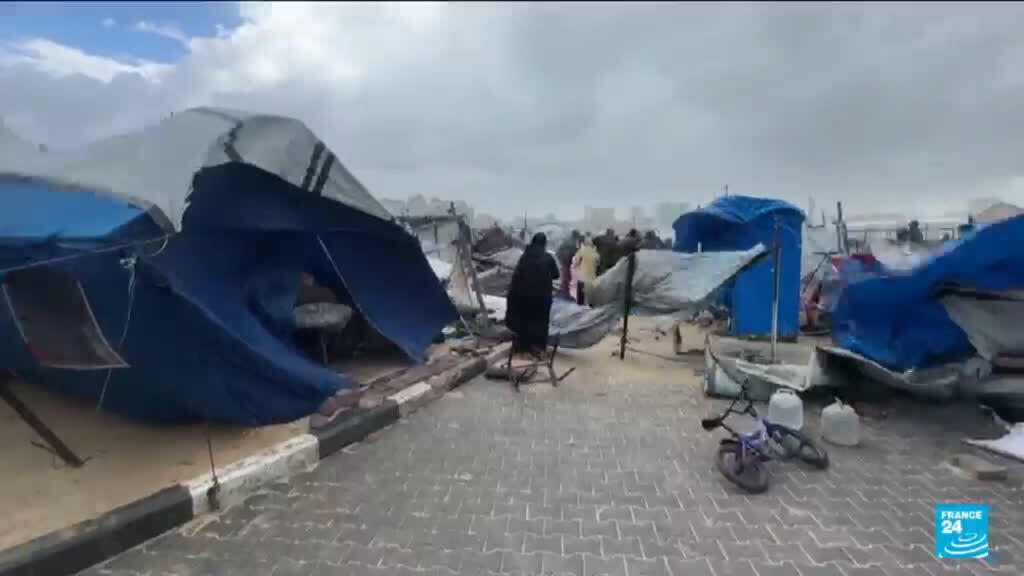
Despite the ceasefire, conditions in Gaza remain perilous for many residents, with UNICEF reporting that more than 100 children have been killed by military action since the truce began. Large numbers of people are living in makeshift tent camps that offer little protection from harsh weather, while many buildings remain structurally unsafe following Israeli bombardments. On Tuesday, at least four people were killed when a wall collapsed onto their tent in Gaza. Ellen Gainsford reports.

50m
3 min
0
Read Article
Greenland: Meeting set in Washington as Trump mulls taking the island
Politics

Greenland: Meeting set in Washington as Trump mulls taking the island

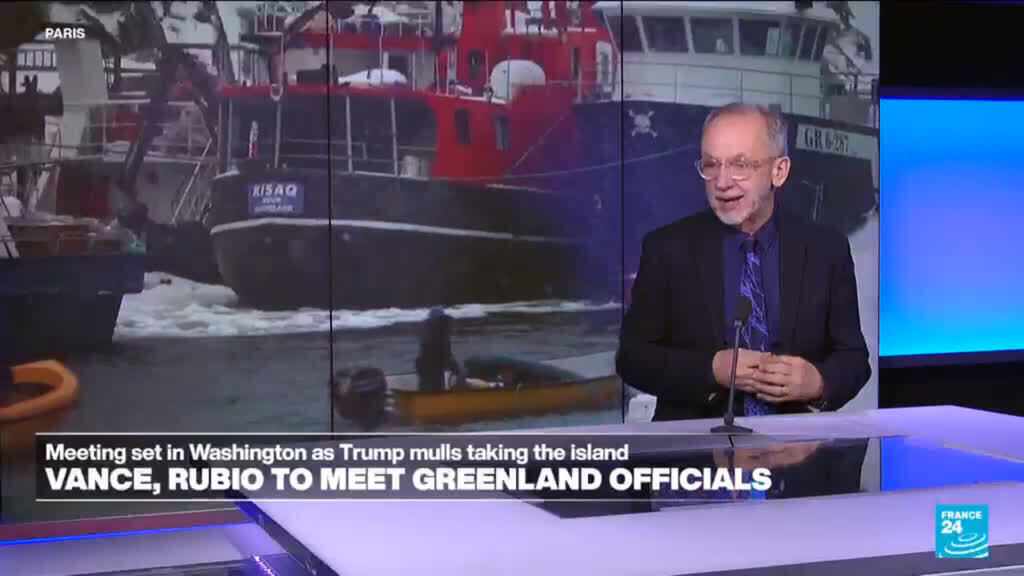
Talks are set to take place today between Danish and US officials over the future of Greenland, following remarks by Donald Trump suggesting the Danish territory should become part of the United States. Danish Foreign Minister Lars Løkke Rasmussen and his Greenlandic counterpart, Vivian Motzfeldt, are traveling to the US for meetings with Vice President JD Vance and Secretary of State Marco Rubio. For more on this, I’m joined by our International affairs editor, Philip Turle.

52m
3 min
0
Read Article
JD Vance, Rubio to meet Greenland officials
Politics

JD Vance, Rubio to meet Greenland officials

The Danish and Greenlandic foreign ministers are set to visit the White House on Wednesday in a high-stakes effort to ease tensions over Greenland, after President Donald Trump said the territory “needs” to become part of the United States. Denmark’s foreign minister had initially sought talks with his US counterpart Marco Rubio, but the discussions were moved to the White House after Vice President JD Vance asked to take part. On Tuesday, Greenland’s prime minister reaffirmed that the semi-autonomous territory would choose to remain within the Danish realm rather than join the US. Emerald Maxwell reports.

53m
3 min
0
Read Article
Trump's High-Stakes Gambit in Venezuela and Iran
Politics

Trump's High-Stakes Gambit in Venezuela and Iran

An emboldened President Trump is making bold strategic moves across multiple geopolitical fronts, from Venezuela to Iran, signaling a new era of assertive American foreign policy with significant risks and potential rewards.

54m
5 min
6
Read Article
🎉

You're all caught up!

Check back later for more stories

Back to Home